Preschool Playground Equipment
Well-designed preschool playground equipment does more than help children burn off energy—it nurtures the development of critical physical, social-emotional, and cognitive skills they'll rely on for years to come.
By choosing play structures designed specifically for early learners—with low-height challenges, sensory-rich materials, and built‑in opportunities for social interaction—you create an environment that lays the foundation for the rest of their lives.
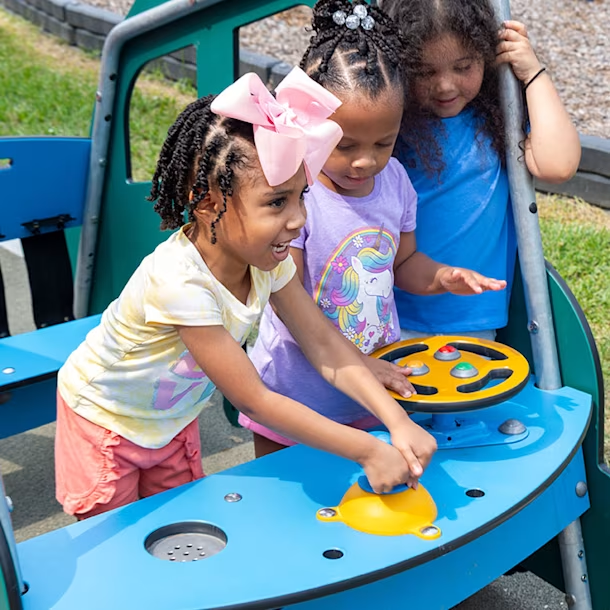
Browse through our early childhood playground equipment—like the Couple Deluxe pictured to the right—and get ideas for your preschool playground!
How the Right Preschool Play Structures Strengthens Your Program
A preschool playground is not only fun for children—it also supports your program in practical, meaningful ways.
Including equipment that encourages turn‑taking and simple rule‑based play helps children practice cooperation, listening, and direction‑following, making classroom time smoother for everyone.
Offering equipment that encourages active outdoor movement helps children release energy in healthy ways, so they return to the classroom more focused and ready to learn.
Designing a playground that supports cooperative play helps children build social skills parents can clearly see, reinforcing their confidence in choosing your preschool.
Designing a Preschool Playground that Fits Your Needs
From selecting the right outdoor play equipment for preschoolers to long-term considerations, here's what you need to consider when designing a playground for preschool environments.
1. Prioritize Capacity & Play Value
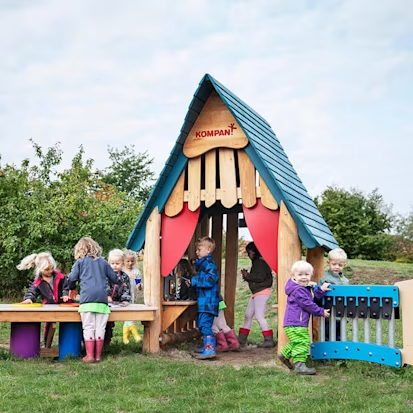
When selecting the right outdoor playground equipment for preschoolers, it’s important to focus on both high capacity and high play value. The is a strong example of how these two qualities come together in one compact play unit. It combines physical, social, cognitive, and sensory play, allowing many children to engage at the same time without crowding. Rather than simply using the structure, children create stories, take on roles, perform for one another, and collaborate, which supports language development, social interaction, and imaginative play. Musical and tactile elements encourage repeated use and longer play sessions, while the open, ground‑level design makes it easy for multiple children to play together in an accessible and inclusive way. This balance of dramatic play, sensory engagement, and group interaction reflects what KOMPAN Play Institute research highlights as key drivers of strong, lasting play value for preschools.
2. Select Smart Surfacing
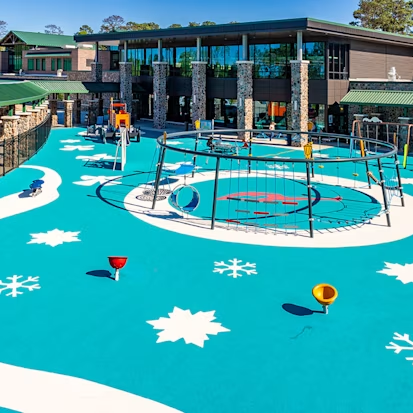
In addition to the equipment itself, surfacing plays a key role in the safety, accessibility, and overall experience of a preschool playground. There are several to consider, from loose‑fill materials like engineered wood fiber (EWF) to unitary systems such as poured‑in‑place (PIP) rubber and turf. For preschool environments, PIP rubber surfacing is often a strong choice because it provides consistent impact protection, supports mobility devices, and creates a smooth, seamless surface that works well for daily preschool use. It also offers extensive customization options, including colors, patterns, and simple graphics that can reinforce play themes or help define activity zones. Durable by design, PIP surfacing works hand‑in‑hand with the equipment to create an inclusive, visually engaging playground that performs reliably over time.
3. Plan for Longevity
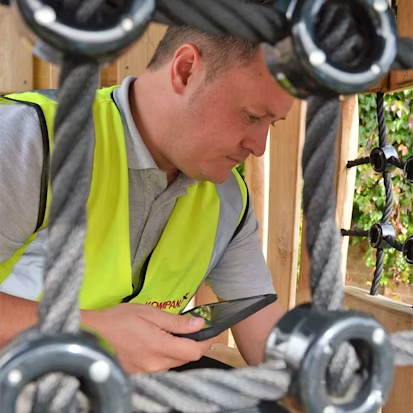
When planning a preschool outdoor playground, it’s also important to consider how the space will be managed and maintained over time. Installation, landscaping, surfacing upkeep, and routine inspections all affect long‑term operating costs and staff workload. Working with a trained playground installer helps ensure equipment, surfacing, and fall zones are installed correctly from the start and in line with safety requirements, reducing the risk of premature wear or rework. Selecting durable, low‑maintenance materials and establishing regular visual inspections by staff helps catch small issues early and extend the life of the playground. Together, these decisions support predictable budgeting and help keep the playground safe, functional, and ready for daily use year after year.
Customer Case
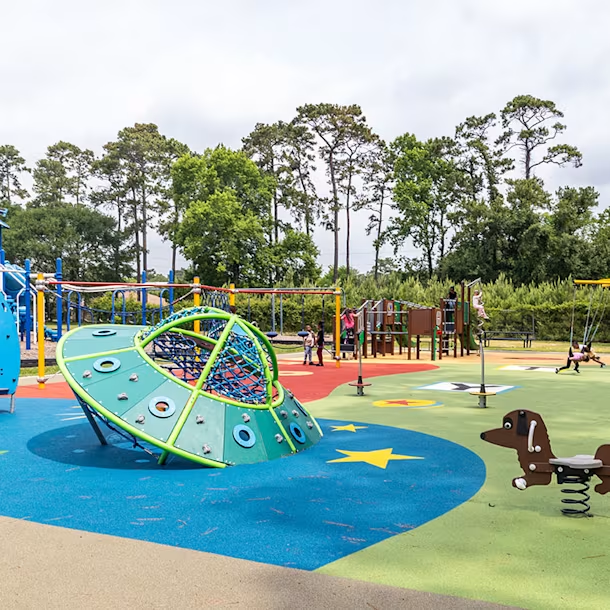
Humble ISD Early Childhood Center
As part of a bond-approved investment, Humble ISD brought themed play to all 30 of its elementary schools, recognizing that learning on the playground is just as important as learning in the classroom.
At the district’s Early Childhood Center, that approach took shape through a playful toy‑themed playground that invites young learners into adventure. Paired with colorful poured‑in‑place surfacing, featuring familiar shapes and icons, the themed early childhood preschool playground equipment supports children’s physical, social‑emotional, and cognitive development while creating an engaging environment built to spark curiosity, imagination, and fun.
Learn more about the case and get outdoor preschool playground ideas for your own space!
How Playgrounds Help Preschoolers Grow
Toddlers and preschoolers grow through play, making preschool playgrounds essential to early childhood development by giving children a place to build physical, social, and emotional skills. Scaled climbers, balance paths, and sensory elements provide early learners with safe opportunities to test their bodies, practice sharing, and calm big feelings—building confidence and friendships, one curious step at a time.
Building Confidence in Movement: Low climbers, balance beams, and stepping stones help toddlers build body awareness and coordination, reducing clumsiness and giving them the courage to try new physical challenges.
Risk-taking in a Safe Space: Preschoolers learn to assess small risks (e.g., climbing a smaller platform) in a controlled environment, fostering independence and resilience.
Cooperative Play: Preschoolers move beyond parallel play to collaborative games (e.g., taking turns on a nest swing), teaching patience, communication, and teamwork.
Empathy and Friendship: Shared play elements such as carousels, group swings, and role‑play structures invite children to play together, take turns, and offer simple help, laying the groundwork for empathy and early friendships.
Emotional Regulation: Outdoor play helps children manage big feelings; running, jumping, and sensory activities like digging in sand provide outlets for frustration or excitement.
Unstructured Exploration: Loose elements like sticks, balls, and fabric scraps (in supervised settings) allow children to invent games, fostering creativity and adaptability.
Plan Your Preschool Playground


Frequently Asked Questions
For preschool playgrounds, poured‑in‑place (PIP) rubber surfacing offers the highest level of consistent safety and accessibility. As a seamless, impact‑absorbing surface, it provides reliable fall protection in high‑use areas like under climbers, slides, and spinners, without shifting or compacting over time. PIP also supports mobility devices and strollers, making it a strong choice for inclusive play environments. While it requires a higher upfront investment, its durability and low ongoing maintenance make it a dependable, long‑term safety solution for early childhood settings.
Designing for mixed preschool ages is about offering clearly signaled, age‑appropriate choices within one safe, connected play space, so every child can find the right level of challenge, sensory input, and social interaction.
Start at Ground Level: Prioritize rich, ground‑level preschool outdoor equipment, so younger toddlers and children using mobility aids can participate easily. Gradually introduce elevated elements such as low platforms, ramps, or gentle climbs for children who are ready for more challenge.
Create Clear Play Zones: Preschool play spaces work best when they are organized by play type and skill level, using clear visual cues rather than strict separation. This gives children freedom to explore while helping caregivers guide, support, and supervise play with confidence.
Design for Supervision and Access: Younger children need close support, so allow enough space for adults to comfortably access play areas. Clear sightlines from seating or gathering points help supervisors monitor multiple zones at once.
Include Sensory Variety: Incorporate tactile, visual, and auditory elements like textured surfaces, music panels, and sand or water play. Research from the KOMPAN Play Institute, including , shows that sensory features support attention and longer play duration in toddlers.
From Preschool to High School
Whether you're designing for toddlers or teenagers, we build school playgrounds that support every age group, ability level, and learning stage across the entire school journey.
Early Childhood

Elementary Schools
Middle & High Schools
Inclusive School Playground Equipment

Educational Playground Equipment
Colleges & Universities
Schools