School Playground Equipment
Designing an effective school playground starts with understanding how outdoor play shapes children’s physical, social-emotional, and cognitive development. Backed by decades of research, evidence-based design principles, and insights gathered from real child input, KOMPAN creates outdoor playgrounds for schools that increase physical activity, strengthen social interaction, improve classroom focus, and provide inclusive play for every age and ability.This foundation of proven impact is why districts trust our school playground equipment and planning expertise when modernizing their campuses.
From first idea to final installation, we partner with schools to turn vision into reality—matching the right play experiences with the right timelines and the right budget. Whether updating an existing play space or creating a new school outdoor play area, our design approach supports well-being and development, simplifies supervision, and helps schools build outdoor environments that attract families and enhance everyday learning.
Explore our outdoor playground equipment for schools below, or browse planning guides, case stories, and FAQs to support your project.
Order now
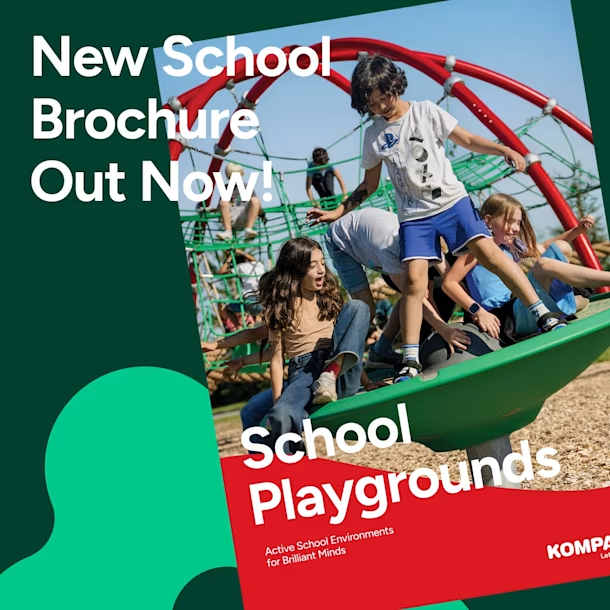
Our New School Playground Planning Brochure is Here
Planning a playground for a school or preschool? Our new brochure is designed to help you turn your vision into reality.
Inside the brochure you’ll find:
Inspiring school and preschool cases
Practical playground planning guidance
Research on why great school playgrounds matter
Popular, proven play equipment
Complete solutions for different needs
From Preschool to High School
Whether you're designing for toddlers or teenagers, we build school playgrounds that support every age group, ability level, and learning stage across the entire school journey.
Early Childhood
Elementary Schools
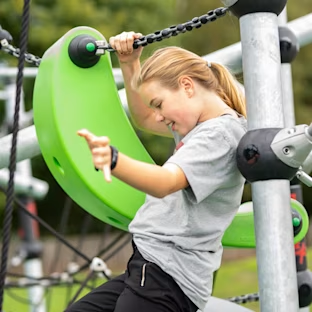
Middle & High Schools
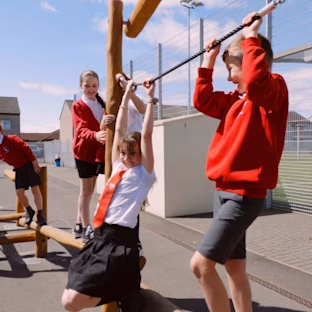
Inclusive School Playground Equipment

Educational Playground Equipment
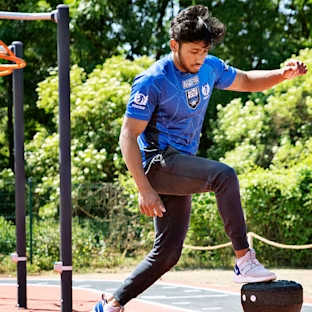
Colleges & Universities
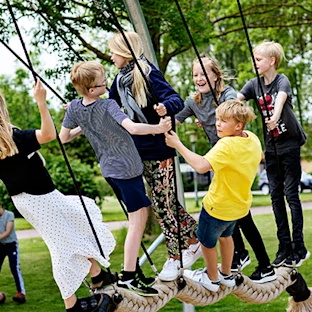
Schools
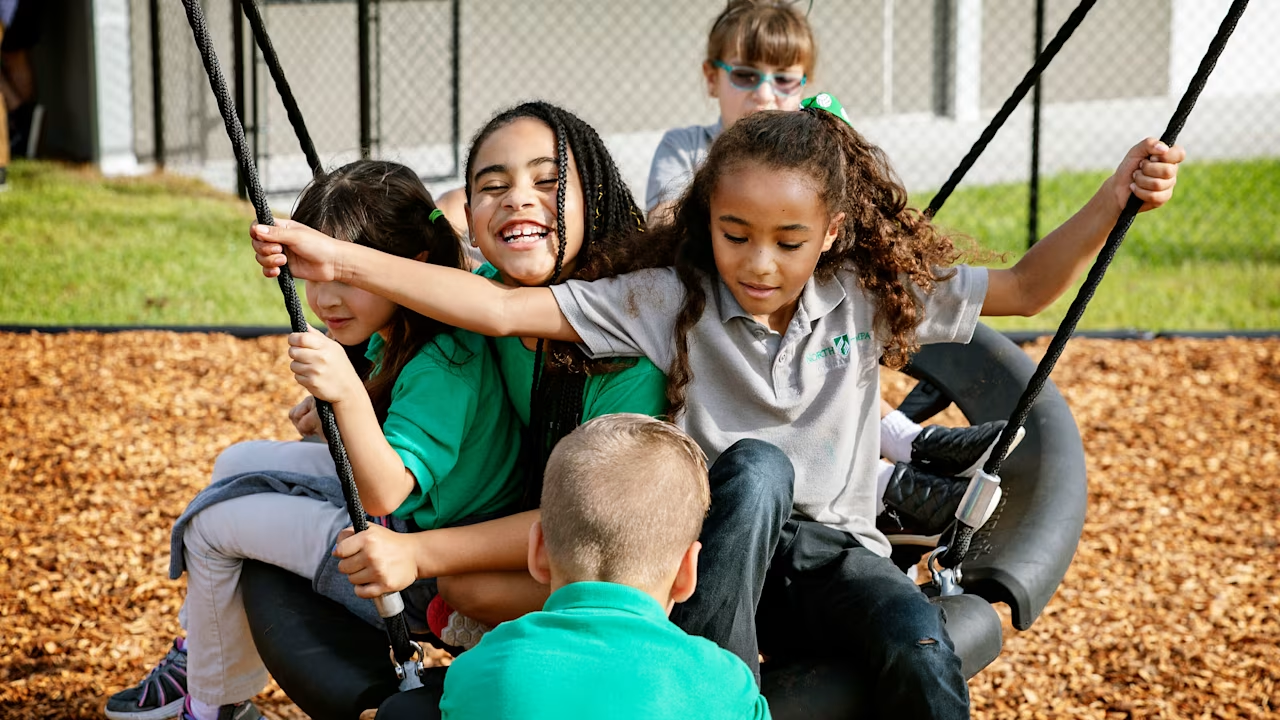
What to Include in a Modern Outdoor School Playground
Primary structures are the foundation of any modern school playground, shaping your overall layout, safety zones, and surfacing needs. Larger structures require wider clearances and deeper safety surfacing, so choosing them early will guide the rest of your design decisions.
When choosing the right play structures for your school, it’s important to select a balanced mix that creates age‑appropriate challenges for children across different grade levels. Towers tend to appeal to older students who seek elevated routes and a greater sense of challenge, while younger children respond well to lower‑level themed play that feels approachable and reflects everyday life. Climbers and nets can then be selected in designs that range from beginner‑friendly to more demanding challenges, depending on the specific products you choose. Keep in mind that choosing equipment with multiple access points helps avoid bottlenecks and supports easier supervision with clearer lines of sight, especially during busy recess and lunch periods.
Once your primary structures are in place, consider adding supporting elements like balancing components, sensory elements—such as sand and water tables and musical play panels—or playground favorites like swings, seesaws, and spinners. These additions help ensure your school outdoor play area offers versatile, inclusive activities for a wide range of ages and abilities.
Surfacing and zoning are two of the most important considerations in any outdoor playground for school environments, as they directly affect safety, accessibility, installation complexity, and long‑term maintenance. In fact, surfacing alone can represent up to 20% of the total project cost, and zoning decisions determine how efficiently your space supports supervision and student flow.
Regardless of material choice, plan early for critical fall heights, fall‑zone clearances, and local compliance requirements. These requirements are typically determined by your playground supplier once your main structures are selected, since different types of outdoor playground equipment for schools require different surfacing thicknesses, fall‑zone depths, and safety buffer distances.
Poured‑in‑place (PIP) rubber offers long life and very low maintenance. While the upfront cost is higher, it is widely preferred by schools for accessibility and durability.
Rubber tiles or mats provide modularity and lower cost but require close attention to seams and drainage, and may shift or warp over time.
Engineered wood fiber (EWF) offers a low entry cost but needs regular top‑ups and is prone to washouts in wet climates.
Synthetic turf provides consistent performance and a clean, uniform appearance when combined with proper shockpad and drainage systems, and is commonly used in multi‑use sport areas.
Despite its lower cost, rubber mulch is generally not recommended for school settings due to environmental concerns, inclusivity limitations, and unpredictable long‑term performance.
Creating a successful school playground requires more than selecting the right equipment. Thoughtful site amenities help shape the overall play environment, making it safer, more comfortable, and easier for staff to supervise throughout the day.
Shade, Seating & Rest Spaces
Add benches, trees, and shading structures to give students places to cool down, self‑regulate, and reset during active play. These areas also provide natural supervision hubs, helping staff maintain clear visibility across the outdoor playground for school spaces.
Teacher Sight Lines
Layout decisions play a major role in supervision. Keep pathways open and avoid tall, clustered obstructions, so teachers can easily monitor multiple zones at once, including high‑traffic transition areas.
Accessibility Features
Ramps, transfer platforms, and clear pathways ensure wheelchair users and mobility‑impaired children can move freely, supporting confident and independent navigation throughout the space.
Perimeter Safety & Boundaries
Fencing, curbing, and natural borders create safe, predictable boundaries that still maintain an open feel. These elements help guide movement, support safety drills, and clarify where active play ends and pick‑up or drop‑off areas begin.
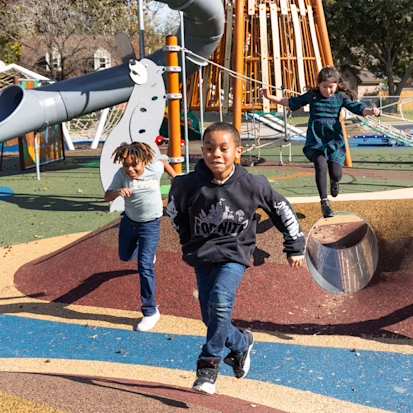
More Movement in the School Day
Up to 40% of children’s daily physical activity can take place during school recess when school playground equipment is thoughtfully designed and inviting. Well‑equipped spaces consistently lift activity levels across age groups, offering developmentally appropriate ways for students to run, climb, spin, and explore. Involving tweens (ages 9–12) in the planning process helps keep them engaged for longer and reduces the common drop‑off in activity that often appears in this age group.

Developmental Benefits
Great outdoor playground equipment for schools goes far beyond physical fitness. It encourages cooperation, communication, and conflict resolution; supports brain breaks that restore attention and executive function; and nurtures inclusive peer interactions that carry back into the classroom. When play environments reflect student needs and offer varied ways to engage socially, emotionally, and cognitively, they help strengthen overall student well-being.
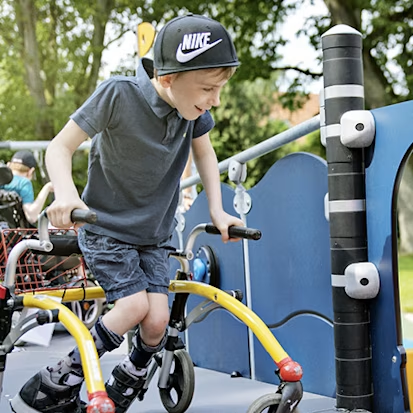
Inclusion & Equity, by Design
Universal design principles—ground‑level play zones, accessible routes, transfer platforms, sensory play areas, and quiet spaces—ensure every child can participate confidently and safely. When inclusion is embedded from the start, school playgrounds support better behavior, belonging, and the broader well‑being of the entire school community. These design choices help create play spaces where children of all abilities feel welcome and empowered.
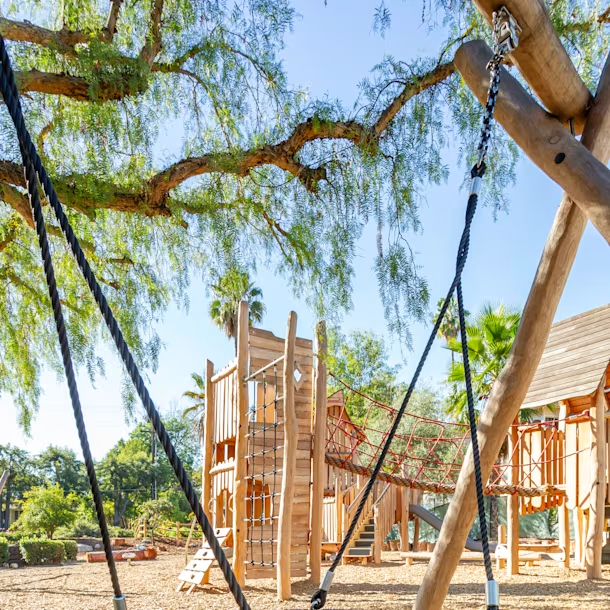
Design Principles & Standards Schools Can Trust
Critical Fall Heights, Safety Zones & Clearance
At KOMPAN, we ensure surfacing thickness, use zones, and fall‑heights are accurately set to align with the height and design requirements of your school playground equipment. By guiding schools through age‑appropriate layout planning, we help create spaces where younger and older students can move safely between play areas without conflict or crowding.
Standards & Compliance
We design to EN 1176, ADA/ABA, and all relevant local requirements and provide clear documentation that’s easy to share across stakeholders and procurement teams. All outdoor playground equipment for schools is engineered and installed to meet these safety standards for complete peace of mind.
Supervision & Sightlines
We help schools design out blind spots, zone by age, and place staff vantage points where sightlines remain open and uninterrupted. With thoughtful layouts and clear visibility, we reduce supervision strain and minimize missed behavior cues during busy transitions and peak activity times.
Risk–Benefit Balance
We support a balanced approach to challenge—providing graduated opportunities that build confidence while still aligning with school safety guidance. This approach is especially valuable for tweens, who need room to test skills within a school playground environment that remains safe and developmentally appropriate.
Universal Design
We incorporate ground‑level play, ramps, contrast surfacing, quiet zones, and sensory options to welcome every ability. By embedding accessibility from the start, we help ensure that playgrounds for schools offer equitable access, meaningful participation, and confident engagement for all students.
“At the Center for Creative Education and The Foundations School, every environment is intentionally designed. The Play Pitt is not an amenity, it is an extension of our educational model, where movement, creativity, and social development converge to advance student growth and academic achievement.”
- Jonathon Ortiz-Smykla, Chief Advancement Officer, Center for Creative Education, West Palm Beach, Florida

Customer Case
Center for Creative Education
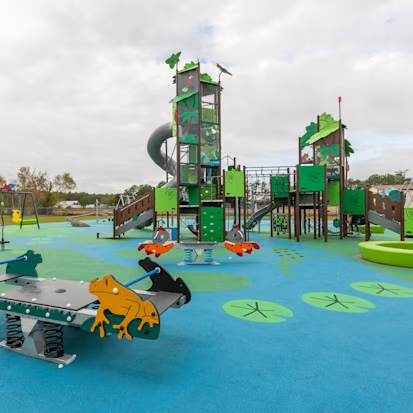
When the Center for Creative Education explored new possibilities for an unused corner of their campus, they imagined an outdoor space that echoed the creativity inside its classrooms. That vision grew into a student‑shaped playground filled with countless opportunities to build physical, social‑emotional, cognitive, and creative skills.
And the impact has been clear:
"With this playground project, we committed to the idea that healthy minds and healthy bodies have to come together, and we've seen that come to life since we've opened the playground. We're seeing more cooperation, more collaboration, and greater self-esteem in and out of the classroom."
- Robert L. Hamon, President & CEO, Center for Creative Education
School Cases Across the US and Beyond
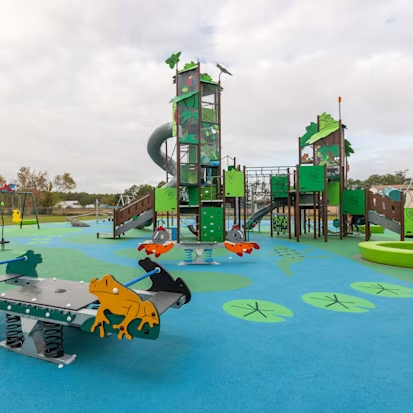
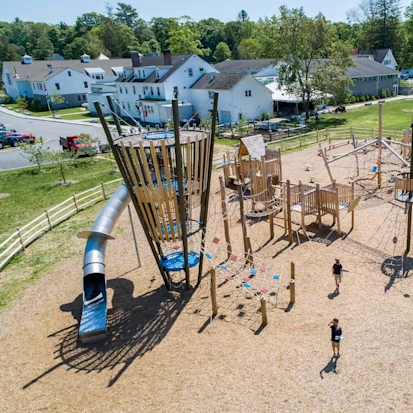
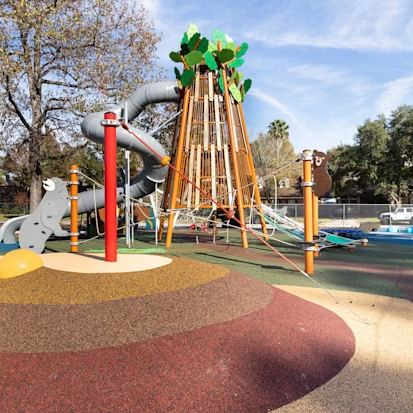
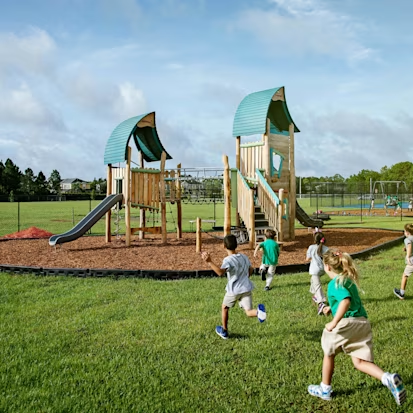
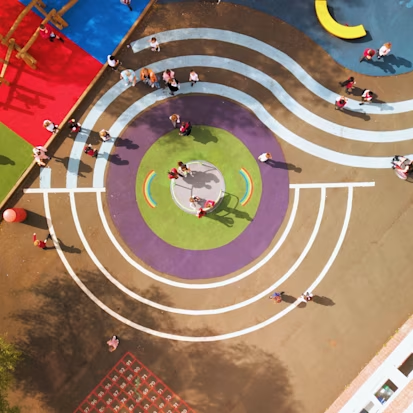
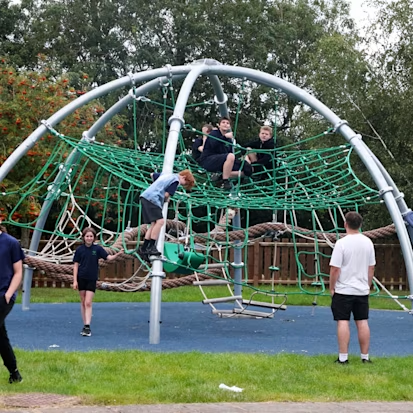
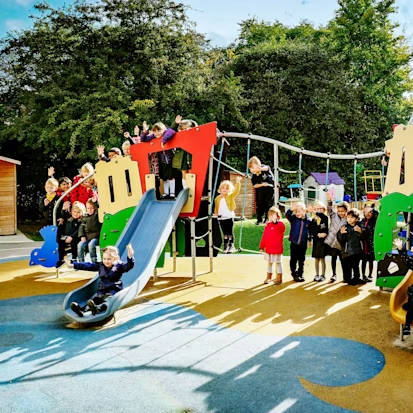
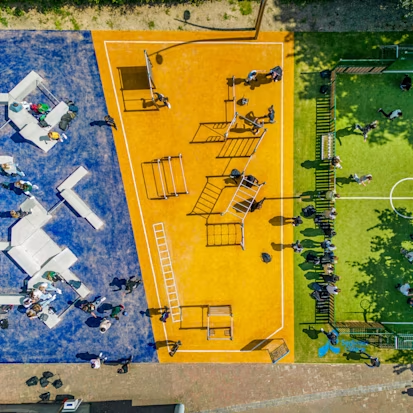
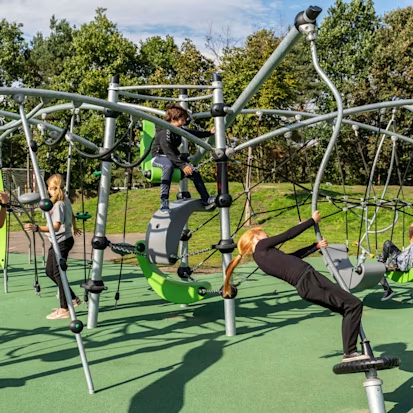
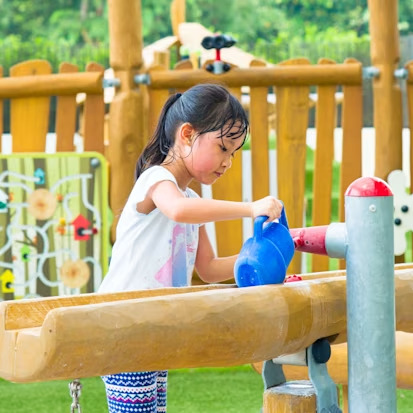

Getting Started
Here's a Little Help to Plan Your School Playground


Frequently Asked Questions
School playground equipment should be inspected on a layered schedule that combines routine visual checks with planned monthly and seasonal reviews. Daily or weekly walk‑throughs help identify obvious hazards early, while scheduled inspections—based on manufacturer guidance and local standards—ensure deeper structural and surfacing issues are caught in time. Keeping a simple log supports accountability and long‑term safety planning.
Poured‑in‑place rubber and engineered wood fiber each perform differently, and the best choice depends on the needs of your school playground. Where budgets allow, poured‑in‑place rubber offers consistent impact protection, low daily maintenance, and no displacement in high‑traffic areas. Wood fiber lowers upfront cost but requires regular top‑ups, attention during heavy rains, and can shift under active use. Many schools choose hybrid solutions—such as rubber under climbers and fiber in lower‑impact zones—to balance performance and cost.
Preventing monopolization on a school playground starts with design choices that naturally distribute play. Providing multiple access points and duplicating high‑interest “hero” activities helps reduce bottlenecks and encourages kids to circulate rather than queue. Spreading challenge levels across the yard also keeps students from clustering in one area, while nearby social “hangout” spaces give tweens appealing alternatives during busy recess periods.