

Theme

Cognitive
suggests a theme and supports dramatic play, which stimulates language and communication skills.
M101
Hen
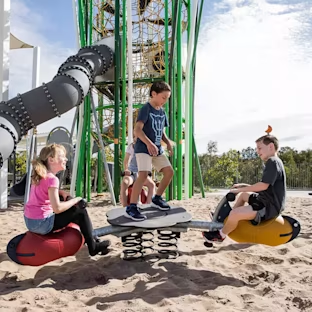
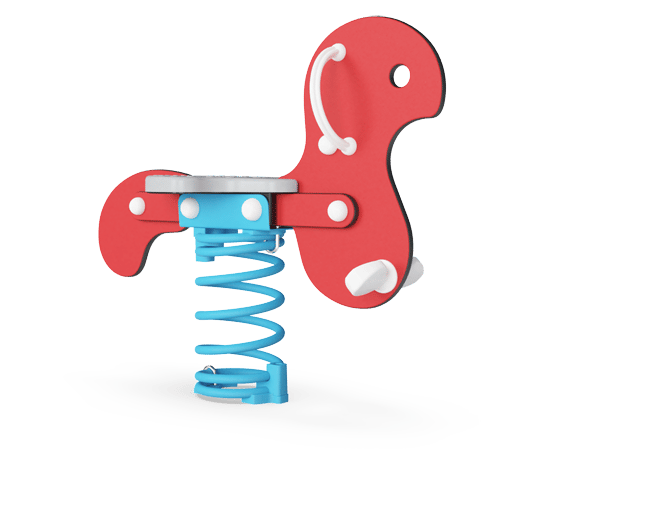
The Crazy Hen was a token for play for 50 years: the whimsical bird-look evoke children's curiosity. The rocking sensation make them want to come back again and again. Movement...
The products might not be exactly as shown
Play value is the value gained from play, the value that makes the child “want” or developmentally “need” to undertake the activity and thus gives the play item holding power. Play value can be described very precisely in developmental terms, looking into the human physical, cognitive, social and emotional developmental stages.
suggests a theme and supports dramatic play, which stimulates language and communication skills.
a good footrest supports intense rocking. Rocking stimulates the senses of balance and space that are fundamental in managing the world securely. Intense rocking also develops coordination and muscle strength.
response to movement increases spatial awareness and sense of balance. These are fundamental motor skills that help the child's ability to sit still on a chair which takes a good sense of balance.
trains the understanding of cause and effect: when I move my body, the spring responds with movement.
the vertical handgrips ensure a firm grip at different heights, necessary for rocking intensely. This trains hand and arm muscles.
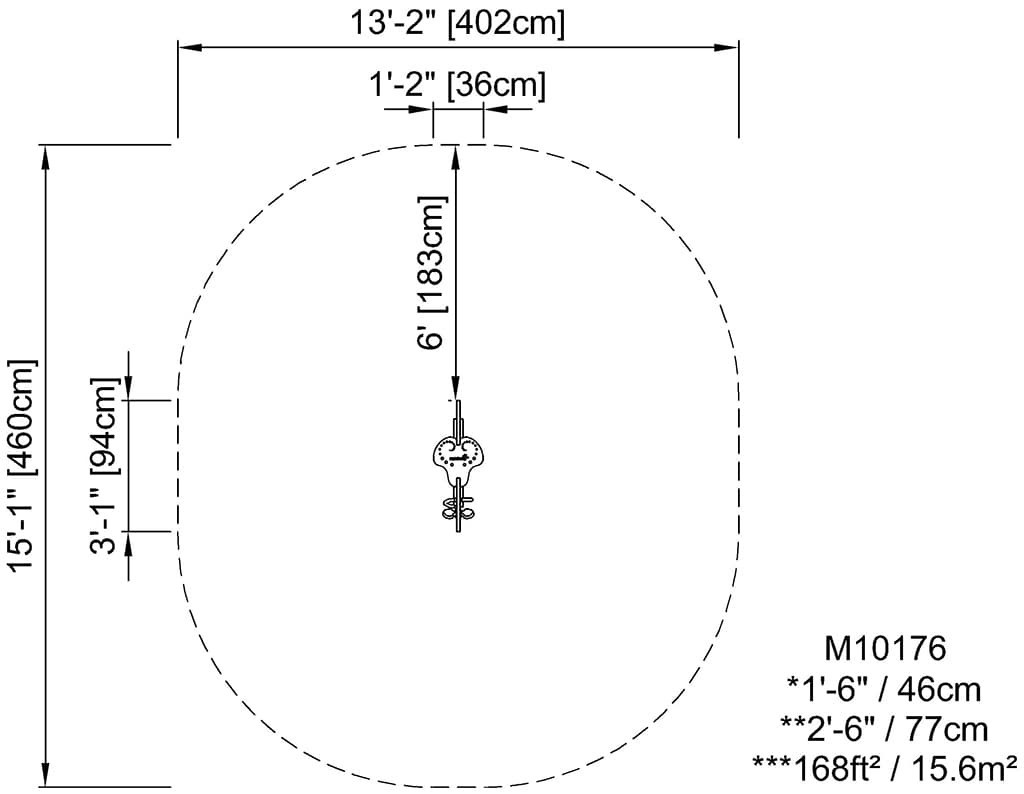
Length
1' 2"
Width
3' 1"
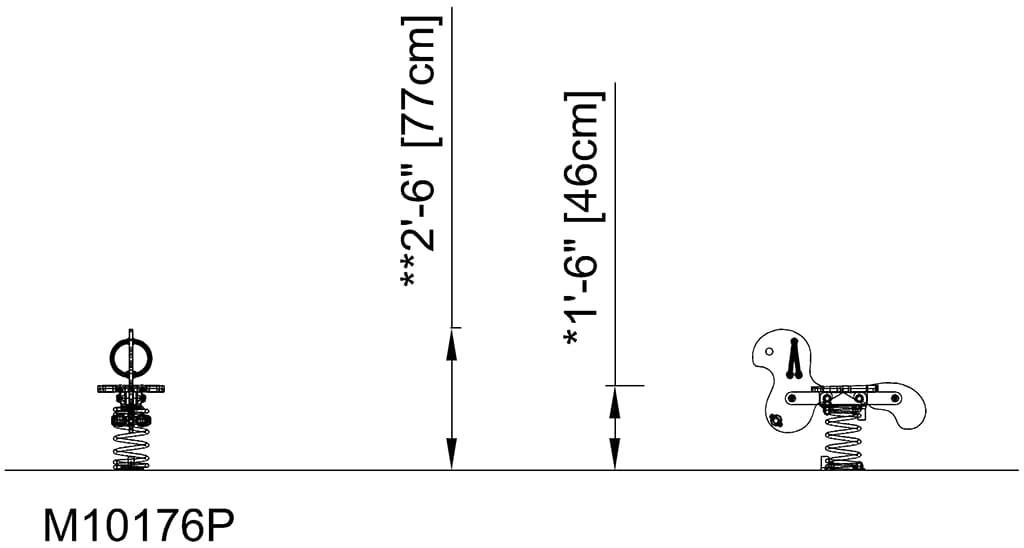
Height
2' 6"
The Crazy Hen was a token for play for 50 years: the whimsical bird-look evoke children's curiosity. The rocking sensation make them want to come back again and again. Movement response is one of the greatest play sensations there are. Apart from the fun, this adds a feeling of control to the child's play. The responsive movement also trains the understanding of cause and effect in young children: that actions have an effect on the world. Rocking on the Crazy Hen trains the child's sense of balance and space as well as hand and arm muscles when holding tight and pushing your feet hard into the foot support. All of these basic motor skills and muscle training actions help train the child's bodily cognition, supporting important life skills such as being able to sit still on a chair or navigate traffic securely.
This product, Hen (M101), is provided by KOMPAN United States.
The springs are fixed by unique anti pinch fittings for maximum safety and long lifetime.
KOMPAN Springs are made of high quality spring steel according to EN10270. The springs are cleaned by phosphating before they are painted with an epoxy primer and a polyester powder coating as top finish. The springs are fixed by unique anti pinch fittings for maximum safety and long lifetime.
Handles and foot rests are made of high-quality nylon (PA6), which requires low maintenance.
KOMPAN GreenLine versions are designed with the most environmentally friendly materials with the lowest possible CO2e emission factor such as EcoCoreTM panels of 100% post-consumer recycled ocean waste.
CO₂ emission
Sustainability Data
Our product and sustainability data validation help customers make informed sustainable buying choices based on methods validated by Bureau Veritas.
M10170-01P
100.74
Total CO₂ emission (kg CO₂e)
3.77
CO₂e/kg (kg CO₂e/kg)
48.28%
Recycled materials
The overall framework applied for these factors is the Environmental Product Declaration (EPD), which quantifies "environmental information on the life cycle of a product and enables comparisons between products fulfilling the same function" (ISO, 2006). This follows the structure and applies a Life-Cycle Assessment approach to the entire Product stage from raw material through manufacturing (A1-A3).
TENDER TEXT SPECIFICATIONS
Do you want to include this specific product in your project, and are you looking for detailed material information to help you specify? We have all the documentation you need. Fill out this form, and we will contact you with the relevant information you need.
If you have any questions regarding this specific product or your project, we are here to help!