Designing Greener Playgrounds
Making greener choices
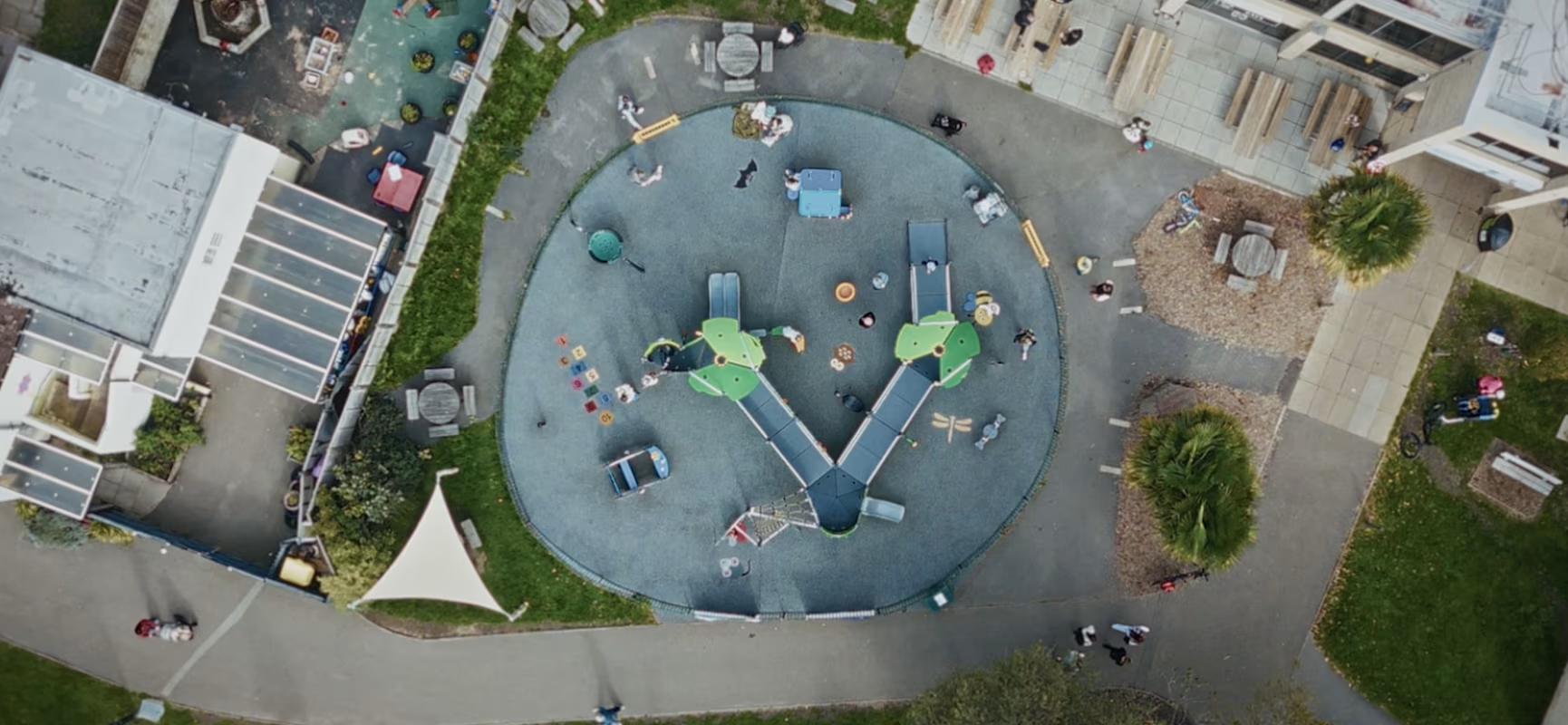
“As a council we’ve put the climate and nature and emergency at the heart of everything we do. So when we were looking at options we wanted to make sure that any supplier could meet those criteria and provide greener benefits and the use of recycled materials is fantastic. We’ve done a lot on the use of single use plastic trying to reduce the use and the importance of the circular economy and reusing materials is really important.”
Councillor Catherine Braun, Deputy Leader of Stroud District Council, Green Councillor representing the Wooton-under-Edge Ward
Overview
Taking responsibility
Playgrounds are more than just a place for children to play, learn and develop their skills. Behind the swings and slides lies the reality that playgrounds have a deep environmental footprint. From the moment the raw materials are extracted to the time when the play equipment needs to be disposed of, each phase of a playground’s life cycle poses a potential challenge to our environment.
At KOMPAN, we have redesigned play from the ground up. Our culture is centered on taking responsibility for reducing our carbon emissions, and we believe this approach will not only lower the carbon impact of every project we deliver but also push our suppliers and competitors to do the same.
Playground Design
Greener playgrounds as part of your procurement
Across the UK, councils are driving toward ambitious carbon reduction goals by 2030 and achieving them takes more than switching to greener energy or boosting recycling efforts. Every decision matters. From choosing construction materials to selecting the right playground equipment supplier, embedding sustainability into procurement sends a powerful message that aligns with your values.
As part of our mission, we have worked with councils across the country to deliver more sustainable playgrounds and help contribute to their carbon reduction goals. These choices don’t just help to reduce your environmental impact; they create a visible, lasting symbol of your commitment to responsible action.
Explore, Learn, Design: Greener Playgrounds
Read and learn more about our approach on working with recycled materials in playground components
The new look of a reduced carbon footprint
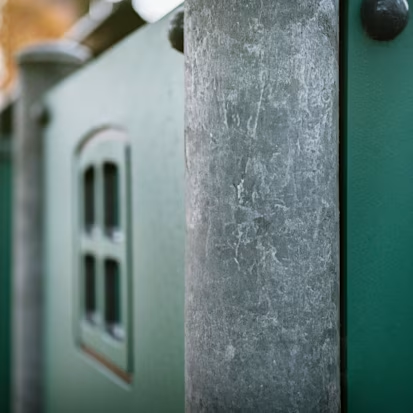
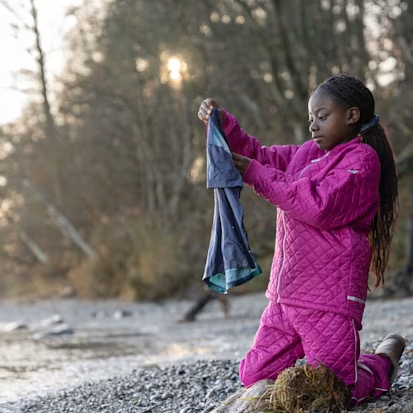
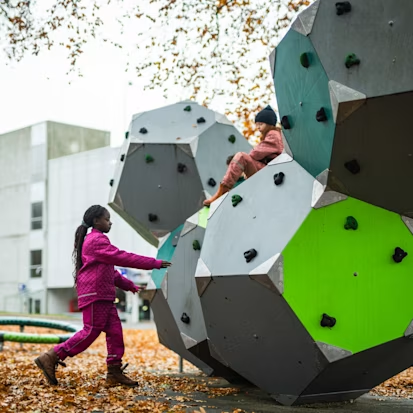
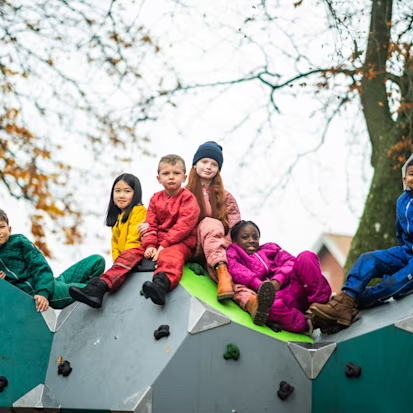
Architect Alexander Sundberg assures that TexMade™ posts and plastic alternatives, developed from textile waste and post-consumer sources, rival steel and plastic in durability. Playground solutions can be as colourful as your heart desires – but with a dramatically reduced carbon footprint.
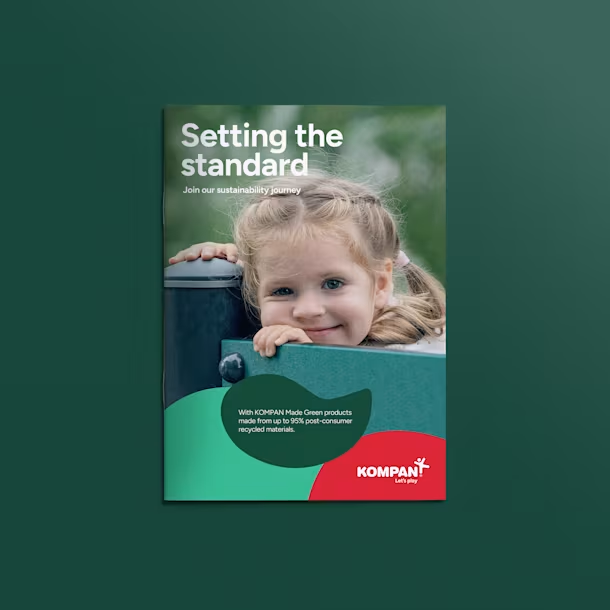
Setting the standard
Join our sustainability journey
At KOMPAN, our mission is to reduce our carbon footprint and those of our customers, protecting the future generations. We are doing this by focussing on the three key areas.
Reducing our operational carbon footprint
Fighting climate change
Increasing regional availability and local footprint
In this brochure, we demonstrate how we are making progress on these three focus areas.
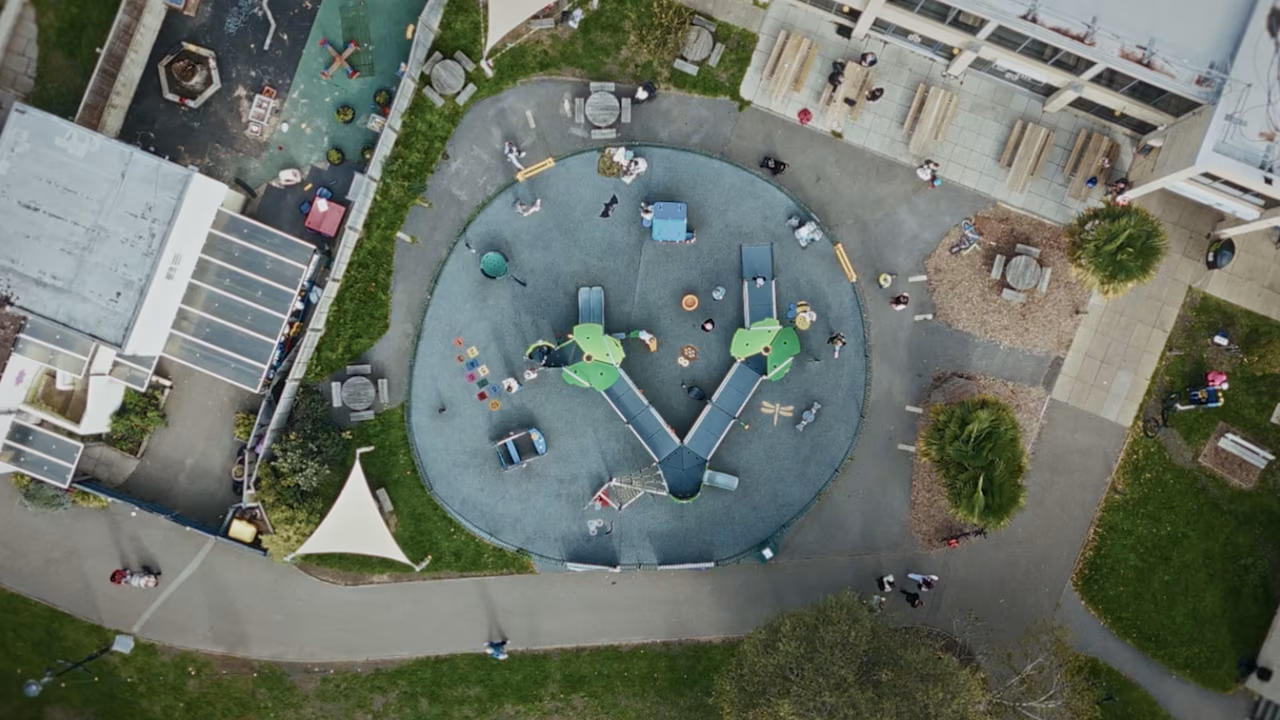
“Stroud declared a climate emergency because there is a climate emergency! There has been for many years, and as a public authority, as a council, we think it’s our role to lead by example.”
Councillor Martin Brown - Stroud District Council Chair of Community Services & Licensing Committee, Green Councillor representing Bisley
What's the difference between Born Green and Made Green materials?
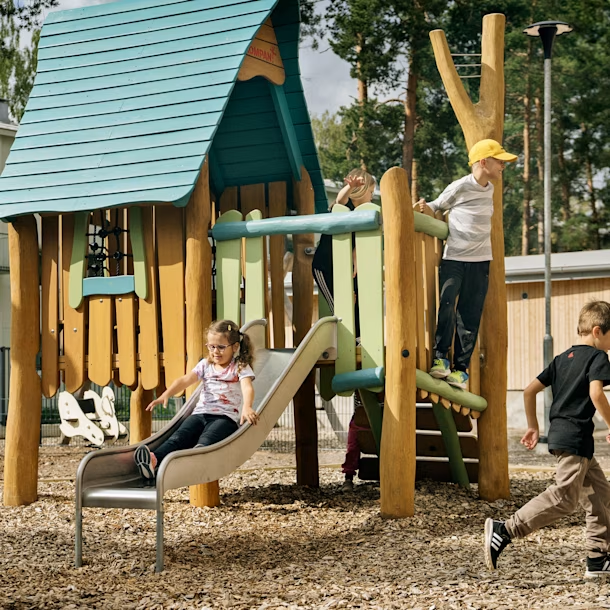
Born Green
Born Green means our products are made from natural hardwoods like Robinia. Robinia is highly durable and does not require any chemical wood preservatives. KOMPAN Robinia products are also available with a FSC® certification (C004450).
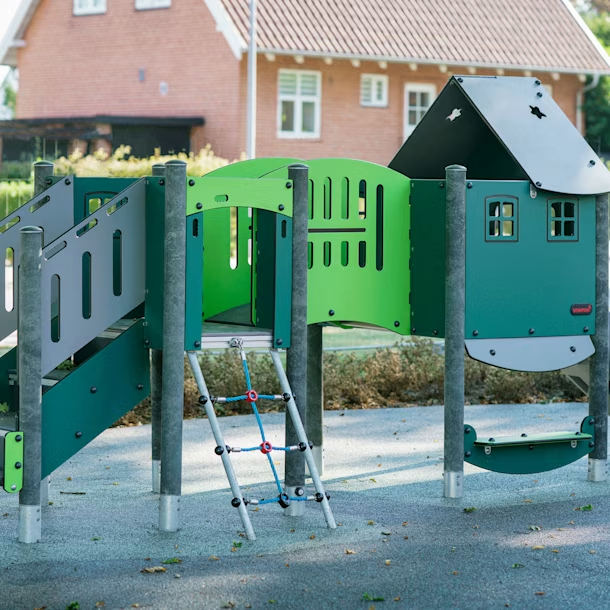
Made Green
products are made from materials with at least 51% and up to 95% post-consumer recycled materials, such as recycled fishing nets, used textiles, food packaging, used plastic bags, etc. In producing KOMPAN Made Green products, we work purposefully to continually increase the proportion of recycled materials. The process and improvements are well documented, and the products are third-party verified.
Built to last
Highest quality materials
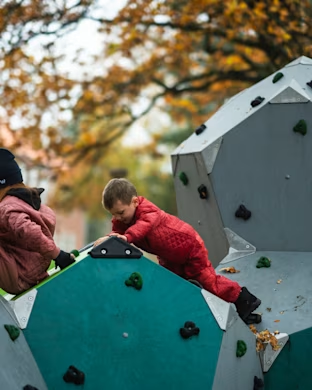
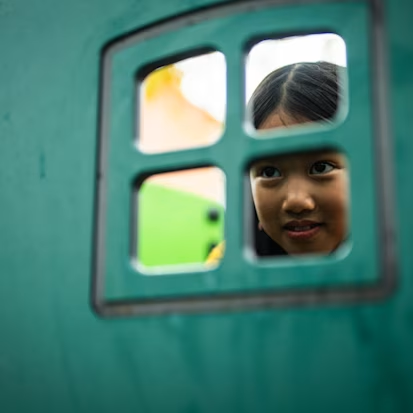
CircularHDPE panels
Our 19mm CircularHDPE panels are made from responsible materials that are not only recyclable after use but also made from >95% post-consumer recycled waste.
UV-protected coloured outer layers
Highly durable in any environment
Supported by a lifetime warranty
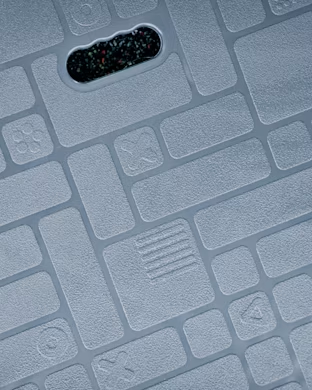
Decks & Steps
All our equipment decks are supported by uniquely designed low-carbon aluminium profiles with multiple attachment options, increasing their strength. Our grey-coloured moulded decks and steps are made from 75% post-consumer recycled polypropylene material with a non-skid pattern and textured surface.
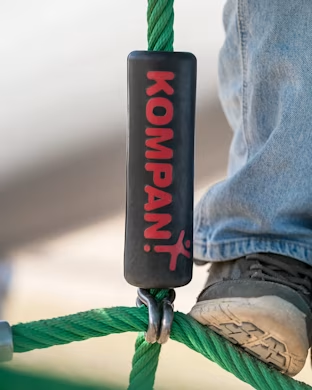
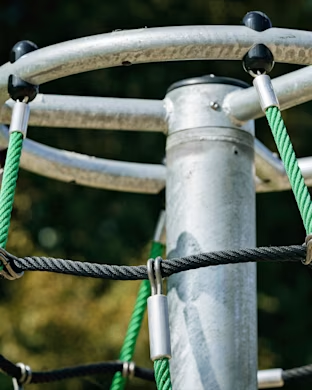
Tempered Corocord™ rope with CircularYarn
Ropes come with galvanised six-stranded steel wires and a steel core, impossible to wear through. Each strand is tightly wrapped with CircularYarn in >95% post-consumer recycled material, which is melted onto each individual strand, making the ropes highly wear and vandalism-resistant.
Galvanised steel
Our steel surfaces and steel frames are hot-dip galvanised inside and outside with lead-free zinc. The galvanisation has excellent corrosion resistance in outside environments and is maintenance-free.
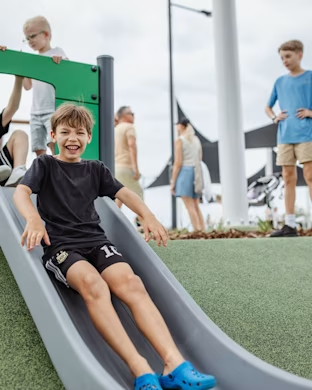
Roto-moulded items (e.g. slides and seats)
Our moulded plastic items are made from 33% post-consumer recycled material in all colours. The teal-coloured items are made from recycled fishing nets from the maritime industry. All items are moulded in one piece, providing strength and minimising weakness caused by joints.
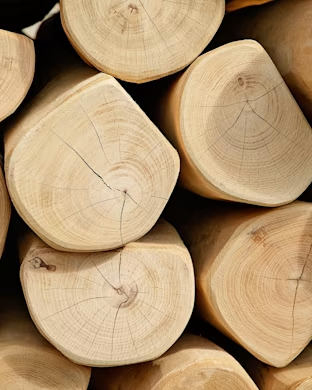
Robinia wood
Robinia wood is a very strong and long-lasting material with a very high level of natural oils. Thus robinia wood makes durable playgrounds which are close to maintenance free and able to last for many years. KOMPAN robinia products can come with FSC®-certification (FSC C004450).
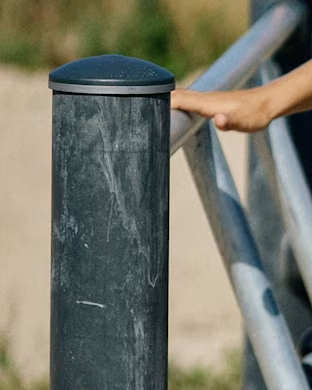
Posts
Main posts are available in five different materials.
1. Impregnated pine wood with an in-ground steel footing.
2. Galvanised steel with powder-coated top finish.
3. Colour-anodised lead-free aluminium, made from low-carbon aluminium.
4. TexMade™ posts are made from >95% postconsumer recycled textile and plastic waste.
5. Low-carbon pre-galvanised steel posts made from 80% post-consumer recycled material.
Q&A on recycled materials
All recycled qualities are better to use if the alternative is using new/virgin material. However, when choosing between a post-industrial or a post-consumer quality, the post-consumer type saves much more CO2e. It is a harder job to use post-consumer qualities. With post-consumer qualities, you must collect, sort, and clean the waste before it can be used again. But the material is saved and can be used again, saving the environment from new /virgin material entering our world and preventing the waste from going into the waste incineration or landfill.
KOMPAN is using narrower post-consumer waste streams, like used textiles, fishing nets, and food packaging post-consumer waste. We can control the quality better than if we used very broad waste. The household waste can be a mix of many different sources.
We only use suppliers with the highest quality standards. It is very important that the waste comes from high-quality suppliers. We have a close connection to our suppliers, visiting them regularly. We are also running tests of all materials we are using to ensure high quality. We do not compromise our high quality and safety standards; they fully apply also to our recycled material qualities.
The Ocean waste we use in our products originates from Europa and the Arctic oceans. It is based on post-consumer streams collected from the maritime industry, such as fishing nets, ropes and trawls.
UV protection is added to all our recycled qualities. Some of our post-consumer recycled materials have no added colour pigment; they are the natural colour from e.g. fishing nets. The colour may vary. We only add UV protection and keep the natural colour from, e.g., the fishing nets.
Want to talk about Greener Playgrounds?
Please fill in your contact details and we will get back to you as soon as possible.