Design | Supply | Install | Maintain
Playground equipment for preschools & childcare centres
A well‑designed early childhood outdoor play space plays a key role in attracting new families and supporting the development of toddlers and preschoolers.
KOMPAN has 40+ years of experience working with preschools, kindergartens, and early learning centres across Australia, supplying safe outdoor play equipment that is fully compliant with Australian Standard AS 4685. Our entire range is also responsibly manufactured using recycled materials, helping to reduce environmental impact.
With end‑to‑end services and options to suit all budgets, styles, themes and age ranges, get in touch with us today.
Benefits of playgrounds in early learning settings
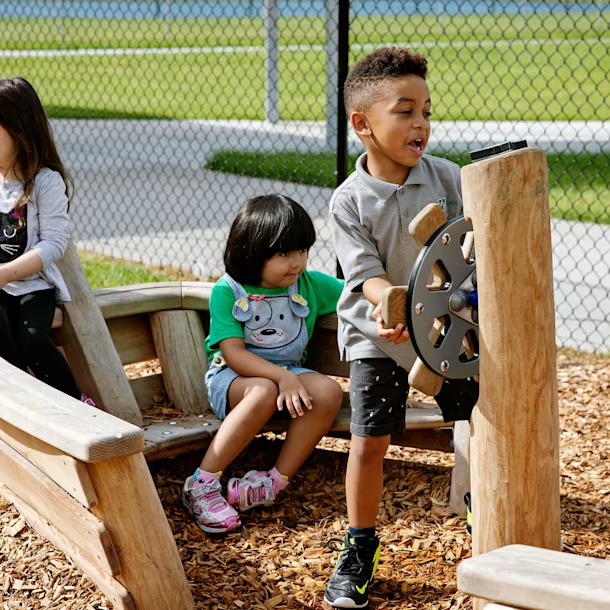
KOMPAN playground equipment is purposefully built to suit the abilities of toddlers and preschoolers.
Children learn to listen and follow simple instructions, like waiting their turn and understanding basic rules, which helps classroom activities run more smoothly.
Playtime teaches routine and transitions, so children get better at switching between activities, a skill that helps them (and their teachers) every day.
Outdoor play uses up children’s energy and helps them focus later, so they’re more ready to sit, listen and learn when they come back inside.
Parents see their children growing and playing well together, which makes them feel good about choosing your preschool or childcare centre.
Playground solutions for toddlers & preschoolers
From small to large, here's how to create a high-quality preschool or childcare center playground
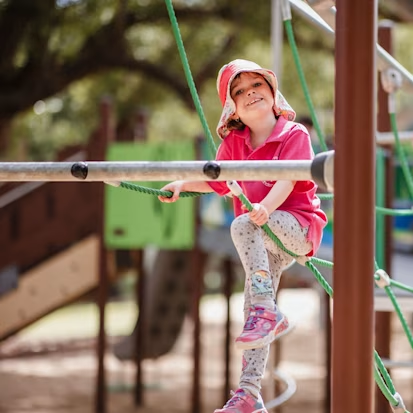
1. Rope climbing equipment
To support physical development, climbing activities can be highly beneficial. KOMPAN's product line is specifically designed for children aged 3-6. These climbers are meticulously crafted with the youngest users in mind, featuring rope thickness tailored to small hands and step sizes suitable for small steps.


Research-led solutions
With 50+ years of experience across more than 90 countries, and 40+ years of local experience in Australia, our preschool and childcare centre solutions are engineered to meet and exceed Australian Standard AS 4685, as well as European Standard EN 1176 and ASTM standards. Every playground we design is backed by the KOMPAN Play Institute, our own internal research centre that studies how specific play movements impact physical, cognitive, social and emotional development in early childhood.
By combining the science of play with - utilising recycled ocean waste and responsibly sourced timber, we provide preschools and childcare centres with high‑quality environments that offer among the lowest total cost of ownership and the highest possible play value.
"For the educators at Learning Ladder, play is more than just preoccupying children. We want our little ones to be learning, developing, and challenged through play, and I think that’s what we’ve achieved here with the new equipment. The kids absolutely love it."
Addy Singh
Learning Ladder Watsonia
How playgrounds help preschoolers grow
Toddlers and preschoolers learn best through play. That’s why preschool playgrounds are so important. These early play spaces support physical development, social interaction and emotional regulation from the very beginning. Child‑scaled climbers, balance paths and sensory areas give young children safe opportunities to explore their bodies, practise sharing and manage big feelings, building confidence and friendships step by step.
Confidence through movement - low climbers, balance beams and stepping stones help toddlers understand how their bodies move in space. This reduces clumsiness and builds the confidence to try new physical challenges.
Safe, supported challenges - preschoolers and toddlers learn to judge small risks, such as climbing to a low platform, in a controlled environment. This supports independence, resilience and problem‑solving.
Learning to play together - as children move from playing alongside others to playing with them, shared experiences like taking turns on a nest swing or building sandcastles help develop patience, cooperation and teamwork.
Empathy and early friendships - play equipment designed for sharing, such as small slides or seesaws, encourages children to notice and respond to others, whether that’s waiting their turn or helping a friend.
Managing emotions through play - outdoor play gives children healthy ways to release energy and manage emotions. Running, jumping and sensory play like digging in sand help children work through excitement, frustration and stress.
Freedom to explore - loose parts play, using items such as balls, natural materials or fabrics in supervised settings, invites imagination and experimentation, supporting creativity and adaptability.
Here's a little help to plan your preschool playground


Frequently asked questions
For toddlers, sand is the most common and budget-friendly choice because it is a soft, easy-to-install material, that it doubles as a sensory play material. However, it does require regular maintenance (raking and top-ups) to stay safe and level.
If you’re looking for higher safety and accessibility, poured-in-place rubber is an ideal choice. It provides excellent cushioning, is wheelchair-friendly, and requires minimal upkeep, though it is the most expensive surfacing product of all.
You don’t need to cover the entire playground in rubber. Focus on high-traffic or high-risk areas (like under climbers or slides) and use sand elsewhere to keep costs down while ensuring safety.
Designing for mixed preschool ages is about giving clearly signaled, age‑appropriate choices in one safe place so each child finds the right level of challenge, sensory input, and social opportunity.
Zone areas by skill level: Divide the site into clear zones for quieter sensory play, gross‑motor activity, sliding/climbing and social/dramatic play. Signage and surface colour/texture should mark transitions, allowing children (and adults) to navigate easily.
Zone areas for easy access: Young children need extra support when playing, so ensure you allow enough space for at least a couple of adults to access the play area. Here, you should also consider creating a line of sight for supervisors to monitor zones from a seating point.
Ground‑level first: Prioritise rich, ground-level play opportunities so younger toddlers and children using mobility aids can join in easily. Add a few graduated elevated elements with ramps or low platforms for those ready to climb.
Sensory variety: Include tactile, visual and auditory elements. Such examples include music panels, textured surfaces, sand and water play, etc. Sensory pay increases attention and play duration in toddlers.
Tailored solutions from preschool and beyond
Our school playgrounds cater to a wide spectrum of age groups and abilities, ensuring a seamless and inclusive experience throughout a user's entire school journey.
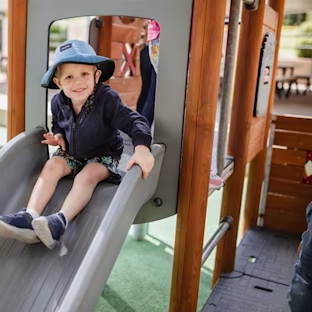
Preschool
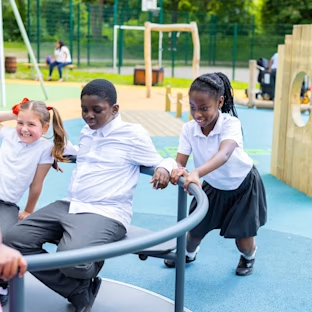
Primary Schools
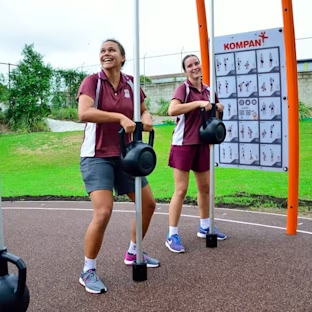
Secondary Schools
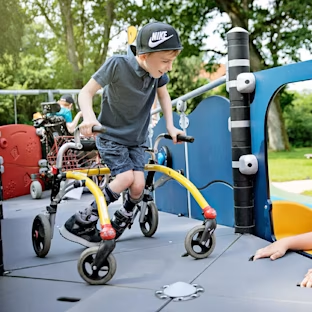
Special Development Schools
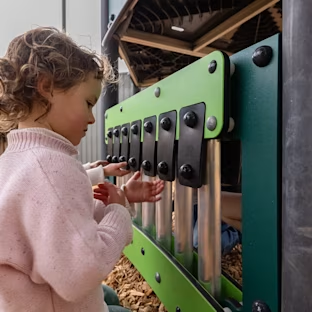
Educational Playground Equipment
Universities & Tertiary Education
Schools