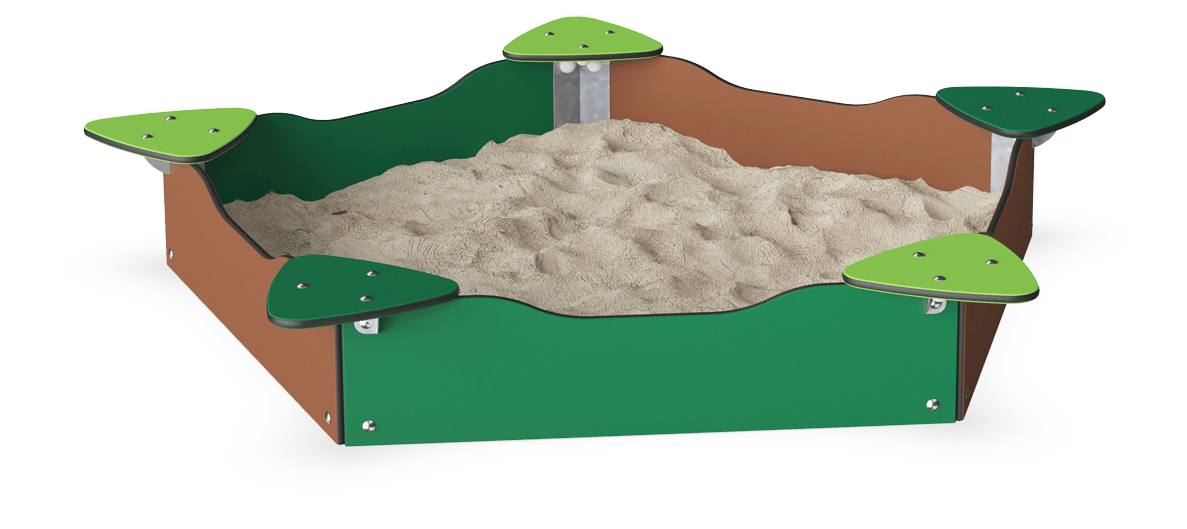
Sandpit
Cognitive
sand play trains the sense of touch and helps children to understand the characteristics of different materials and their uses. Sand can be sieved when dry and shaped when wet.
PCM503
Sandpit
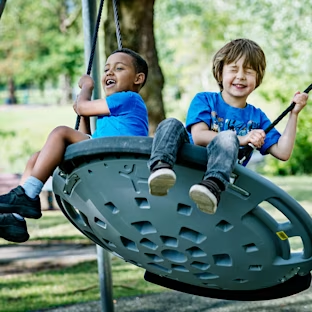
This appealing sandpit invites children to play with friends or alone for long periods of time. Thanks to the five coloured seats or tables, the play gets diversity: the children...
Play value is the value gained from play, the value that makes the child “want” or developmentally “need” to undertake the activity and thus gives the play item holding power. Play value can be described very precisely in developmental terms, looking into the human physical, cognitive, social and emotional developmental stages.
offers a point for retraction and a point for meeting and sharing.

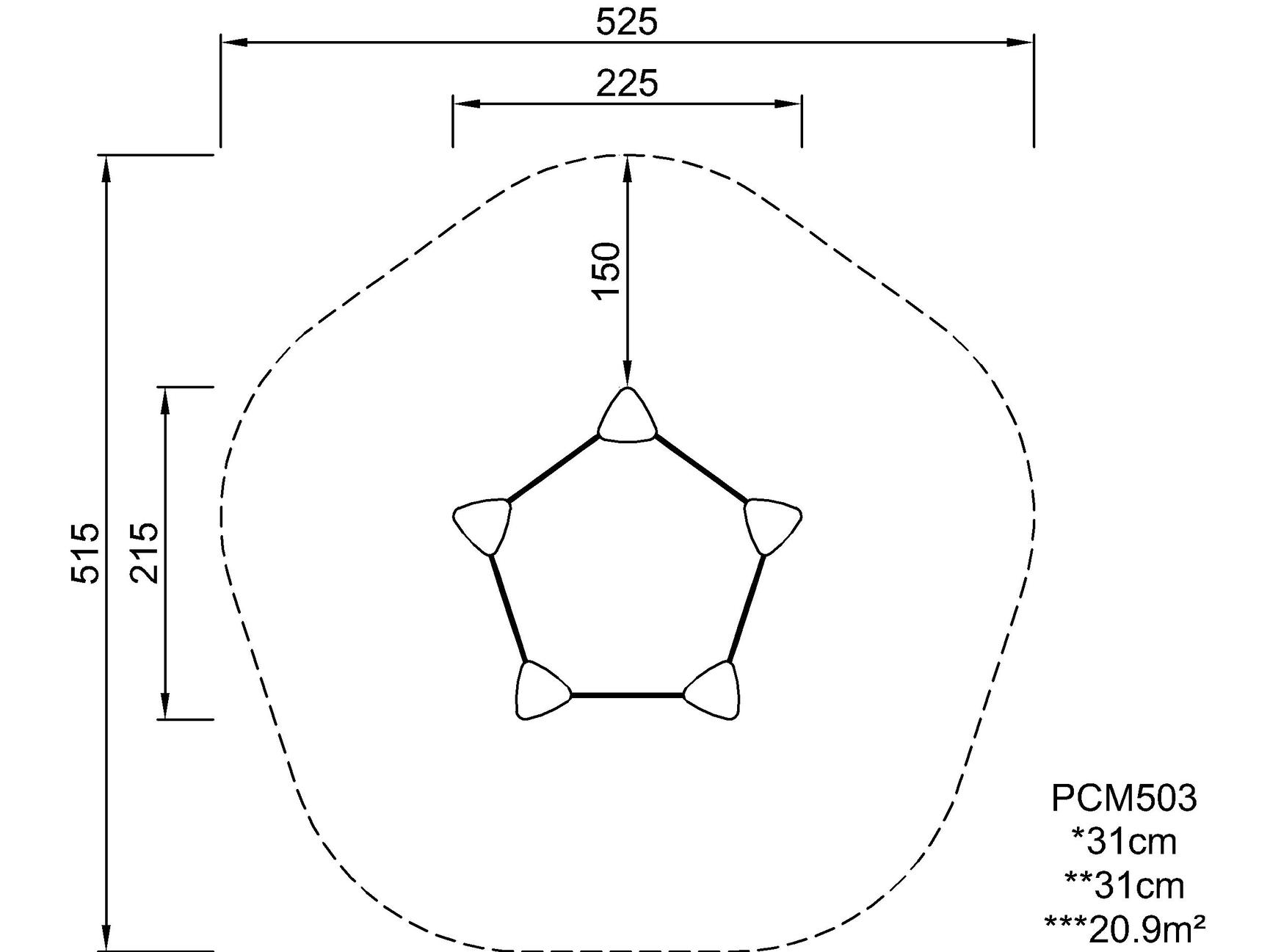
Length
225 cm
Width
215 cm
Height
31 cm
This appealing sandpit invites children to play with friends or alone for long periods of time. Thanks to the five coloured seats or tables, the play gets diversity: the children have a firm plate to place sand tools and sand creations on. Carers have seats, and more parents can be seated facing the sandbox. This is a well-known facility to enable longer stays. The additional four seats give children the possibility of creating each their space, from where they can have their home, their shop, their workshop. Sand invites deep play. The changeable character of sand from when dry to when wet fascinates children. It additionally trains their tactile sense and understanding of material character and nature phenomena. These are important life skills that help the child understand the surrounding world. In short, sand play shapes motor skills and cognition.
This product, Sandpit (PCM503), is provided by KOMPAN International Sales.
Panels of 19mm CircularHDPE. CircularHDPE is a highly durable, eco-friendly material, which is not only recyclable after use, but also consists of material produced from +95% recycled post-consumer material from food packing waste.
The steel surfaces are hot dip galvanized inside and outside with lead free zinc. The galvanization has excellent corrosion resistance in outside environments and requires low maintenance.
CO₂ emission
Sustainability Data
Our product and sustainability data validation help customers make informed sustainable buying choices based on methods validated by Bureau Veritas.
PCM503-0402
178.14
Total CO₂ emission (kg CO₂e)
2.79
CO₂e/kg (kg CO₂e/kg)
70.34%
Recycled materials
The overall framework applied for these factors is the Environmental Product Declaration (EPD), which quantifies "environmental information on the life cycle of a product and enable comparisons between products fulfilling the same function" (ISO, 2006). This follows the structure and applies a Life-Cycle Assessment approach to the entire Product stage from raw material through manufacturing (A1-A3).

TENDER TEXT SPECIFICATIONS
Do you want to include this specific product in your project, and are you looking for detailed material information to help you specify? We have all the documentation you need. Fill out this form, and we will contact you with the relevant information you need.
If you have any questions regarding this specific product or your project, we are here to help!