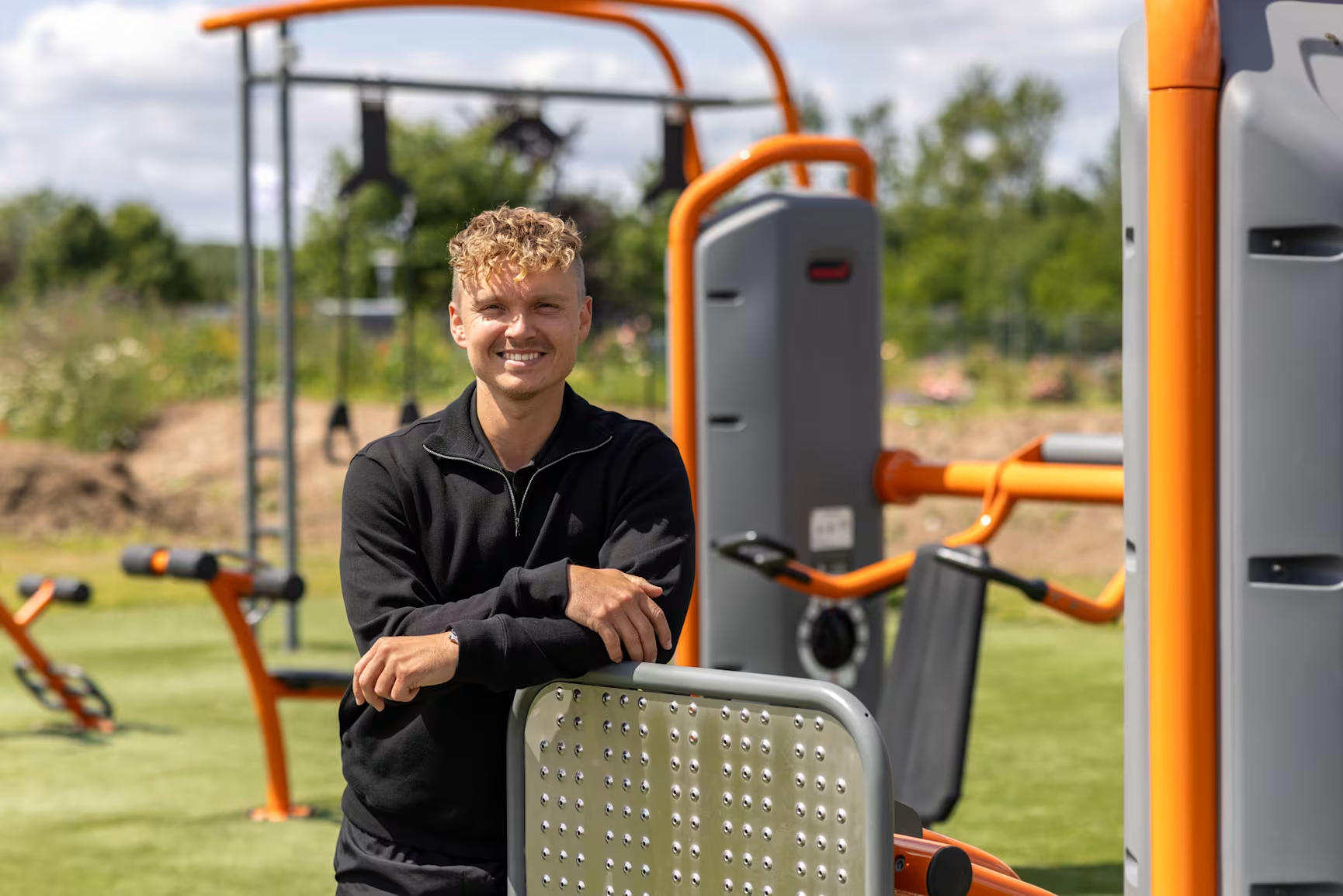
FSW231
Balance Board
Age Group
13+ Years
Capacity
1
Inclusive
Yes
Product category
FSW231
Balance Board
Specifications
Balance Board
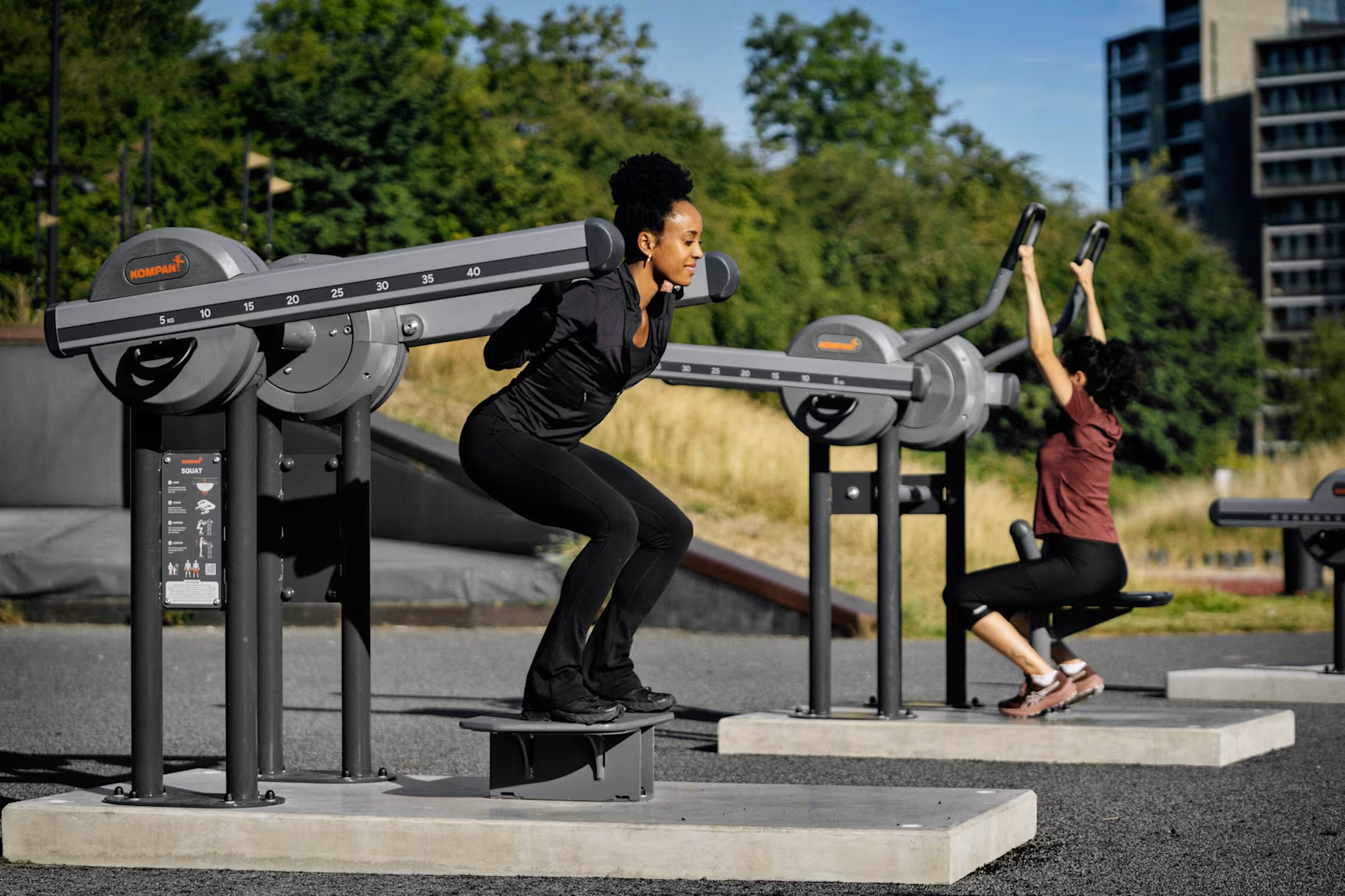
The reactive balance board resembles situations where the contact with the surface suddenly gets unstable. The Balance board mimics situations that occur in metros, buses or on slippery surfaces. It can be used on one or two feet with or without support, but for even more challenging exercises the signs on the high posts can be used. By alternatingly touching the different symbols in a pre-defined pattern with right and left hand both full body balance, coordination and cognition can be challenged.
This product, Balance Board (FSW231), is provided by KOMPAN International Sales.
Length
87 cm
Width
89 cm
Height
200 cm
Fall Space Length
387 cm
Fall Space Width
387 cm
Age Group
13+ Years
Capacity
1
Inclusive
Yes
Product category
Fitness Essentials
Product line
Stay Fit
Product Highlights
Quality that lasts

The HPL board is 586mm x 586mm and can move 70mm in all directions. High-pressure laminate plates (HPL) have a moulded-in non-skid surface. HPL is a homogenous material with a very high wear resistance.
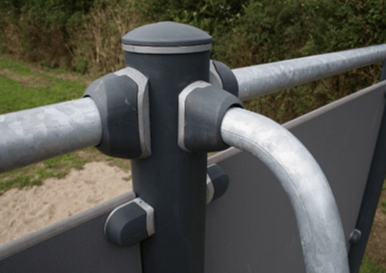
The connectors are made of die-cast aluminium, specially alloyed for the outdoor environments and heavy usage. The screws attaching the connectors are stainless steel and protected by zinc washers.
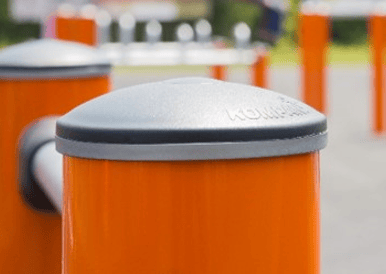
Post are made of Ø101.6 x 2mm, pre-galvanized carbon steel and powder coated, a great protection to all conditions.
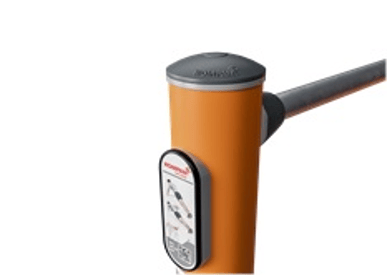
The information sign is made of a PA6 (Polyamide) and shows the most relevant exercise and a QR code. When scanned the QR code will link to an animated illustration of the exercise and offers the possibility of downloading the KOMPAN sport & fitness App, which will provide a large amount of exercises and workouts.

All KOMPAN fitness products are compliant with the ASTM F3101 & EN16630 Outdoor Fitness Standards. Load tests are performed as a static test by adding dynamic factors as well as safety factors to the specified load of 78kg per user. A product intended for 1 user is loaded with 420kg.

The balance board is connected to the posts with 506mm long stainless steel (AISI304) chains with 6mm links. The Swivels used are made of PUR coated sintered stainless steel with bronze bearings, providing a strong and smooth movement.

One Foot Without Support

One Foot With Support

Touch All Signs

Touch Upper Signs

Two Feet Without Support

Two Feet With Support
The KOMPAN Fitness Institute is a global network of sports and fitness experts and professionals who share knowledge, measure trends and conduct research. The network maintains strategic partnerships with all sorts of local parties, including universities, researchers, scientists and fitness experts and adds to the knowledge of effective sport and fitness at large.This knowledge permeates how we develop our outdoor fitness equipment for outdoor use and create inspiring outdoor fitness sites for all ages and abilities.
CO₂ emission
Sustainability Data
Our product and sustainability data validation help customers make informed sustainable buying choices based on methods validated by Bureau Veritas.
FSW23100-0902
274.24
Total CO₂ emission (kg CO₂e)
3.79
CO₂e/kg (kg CO₂e/kg)
60.01%
Recycled materials
The overall framework applied for these factors is the Environmental Product Declaration (EPD), which quantifies "environmental information on the life cycle of a product and enable comparisons between products fulfilling the same function" (ISO, 2006). This follows the structure and applies a Life-Cycle Assessment approach to the entire Product stage from raw material through manufacturing (A1-A3).