Surfacing guide
Engineered wood fibre as playground surfacing

What is engineered wood fibre surfacing?
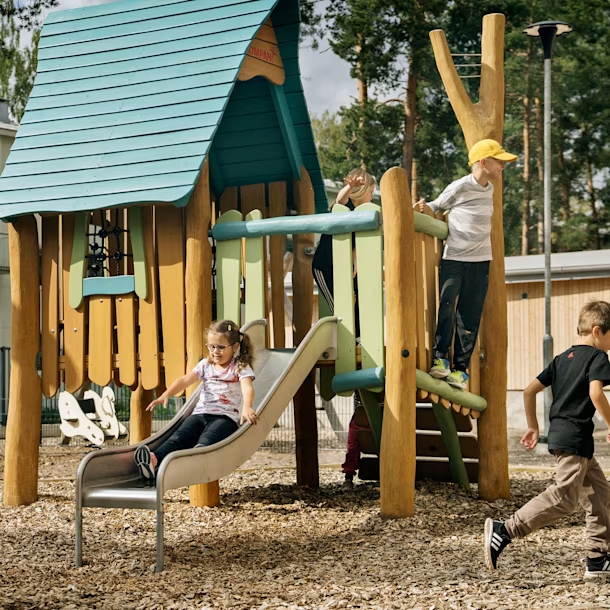
Engineered wood fibre (EWF), or wood chips for playgrounds, are a loose-fill surfacing type, often used in playgrounds where a natural look and feel is preferred. It’s fairly easy to install, but requires more maintenance than, e.g. rubber surfacing. Playground wood chips are often used as surfacing in a contained area to keep the material in place, and are therefore a fine option for a sandbox or sensory play area.
Unless you’re building a natural playground where EWF surfacing works really well, it is often used together with other types of surfacing.

Where does engineered wood fibre works best?
Engineered wood fibre (playground wood chips) is most commonly used in:
Nature and forest playgrounds
Early years and kindergarten outdoor spaces
Schools with large green or landscaped grounds
Low‑intensity play zones
Outdoor learning and sensory play environments
It is particularly effective where the experience of natural materials is an integral part of the playground design.
Engineered wood fibre compared to other playground surfacing options
When compared with other playground surfacing solutions:
EWF vs rubber surfacing: Engineered wood fibre offer a natural look but require more maintenance and offer lower accessibility. offers endless customisation options and is lower maintenance, but at a higher initial price point.
EWF vs hybrid grass: provides a firmer, more accessible natural surface, where the natural grass will grow through the hybrid grass mats. So if you want the natural look, or are looking for landscaping options, hybrid grass could be the better option.
EWF vs sand surfacing: both are loose‑fill materials, but each supports different play experiences. are better for sensory play, but both surfacing types requires similar maintenance.
The right choice depends on the intended use, maintenance resources and overall playground concept.
Benefits and limitations of choosing playground wood chips as your surface

Benefits of EWF playground surfacing
Wood chip playground surfacing is selected for a range of practical and aesthetic reasons:
Natural appearance that blends into landscape‑led and nature‑based playgrounds
Impact‑absorbing properties when installed at the correct depth
Supports imaginative and sensory play
Permeable surface that allows water to drain through naturally
Works well in large, open outdoor play areas
For projects focused on natural materials and outdoor learning, engineered wood fibre surfacing offers a familiar and well‑established solution.
Limitations and considerations
When choosing wood chip playground surfacing, several important factors should be considered:
Requires frequent maintenance and topping up
Material decomposes over time and compacts with use
Wood chips can migrate outside play areas if not well contained
Limited accessibility for wheeled mobility
Less suitable for high‑traffic or compact urban playgrounds
These considerations mean wood chip surfacing is typically best used selectively rather than as a site‑wide solution.
Installation and maintenance
Wood chips can be a cheaper surfacing option, but ongoing maintenance is required to keep the site functional.
Engineered wood fibre requires:
Proper ground preparation and weed control
Installation to a defined minimum depth
Containment using edging or borders to keep material in place
Ongoing maintenance typically includes:
Regular raking and levelling
Periodic topping up as material breaks down
Visual inspections for debris and compaction
Compared with fixed playground surfacing options, engineered wood fibre involve higher ongoing maintenance, which should be planned for from the outset.
Choosing the right surfacing for your area
Engineered wood fibre is one of several available surfacing options. The most suitable solution depends on:
Type and intensity of play
Fall height and safety requirements
Accessibility needs
Maintenance expectations
Desired look and feel of the playground
Many playgrounds achieve the best result by combining multiple surfacing types to suit different zones and activities.
Frequently asked questions
Engineered wood fiber (EWF) playground surfacing is safe when installed and maintained at the correct depth. As a loose‑fill safety surfacing, wood chips provide impact absorption and are commonly used in playgrounds with low to moderate fall heights, particularly in nature‑based play environments.
Wood chip playground surfacing requires regular maintenance to remain effective. This includes routine raking, levelling and topping up, as the material naturally breaks down and is displaced through use and weather over time.
Engineered wood fibre surfacing is suitable for public playgrounds and schools where maintenance is planned. It is most often used in early years settings, forest playgrounds and outdoor learning environments that prioritise natural materials and informal play.
Wood chip surfacing has limited accessibility for wheelchairs and pushchairs. For inclusive playground design, it is typically combined with firmer surfacing along main routes or used in clearly defined play zones rather than across the entire site.