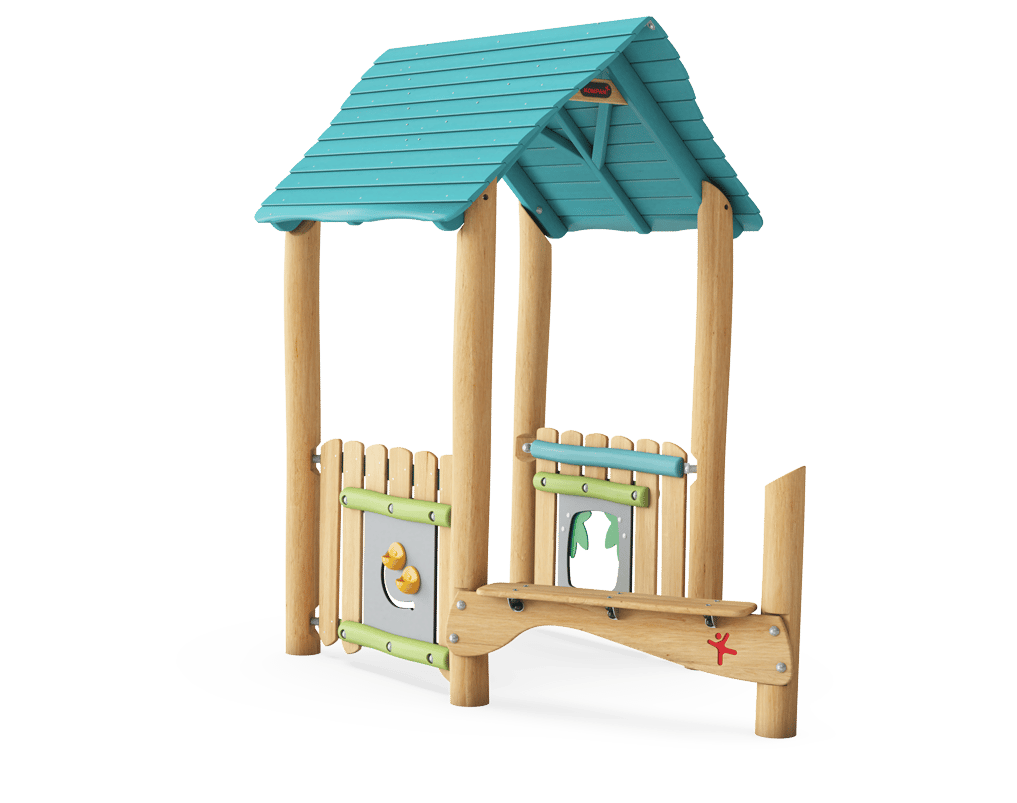
NRO416
Little Duck's Gate
Price guide
16,700 AUD
Age Group
1+ Years
Capacity
10
Inclusive
Yes
Product category
NRO416
Little Duck's Gate
Specifications
Little Duck's Gate
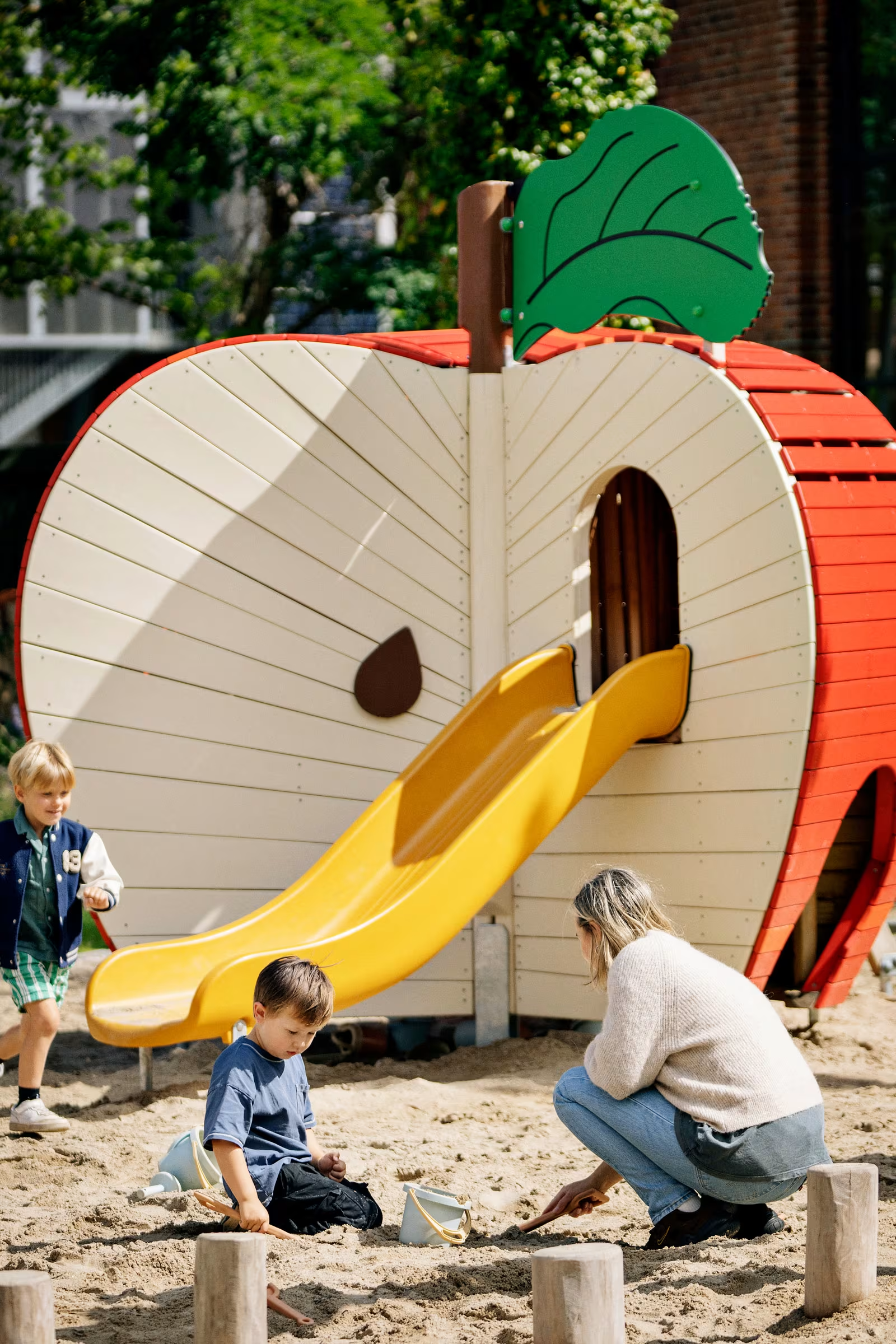
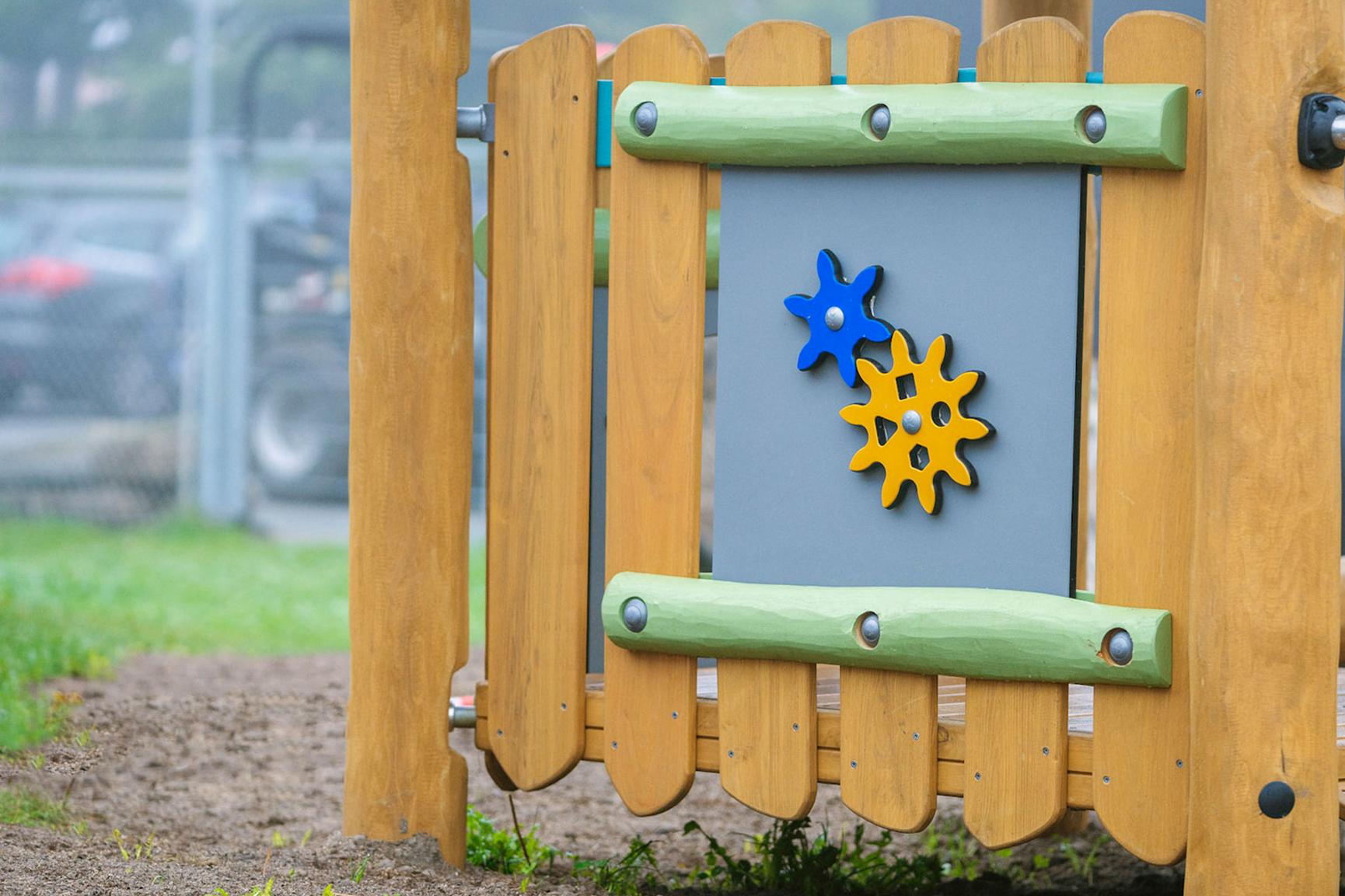
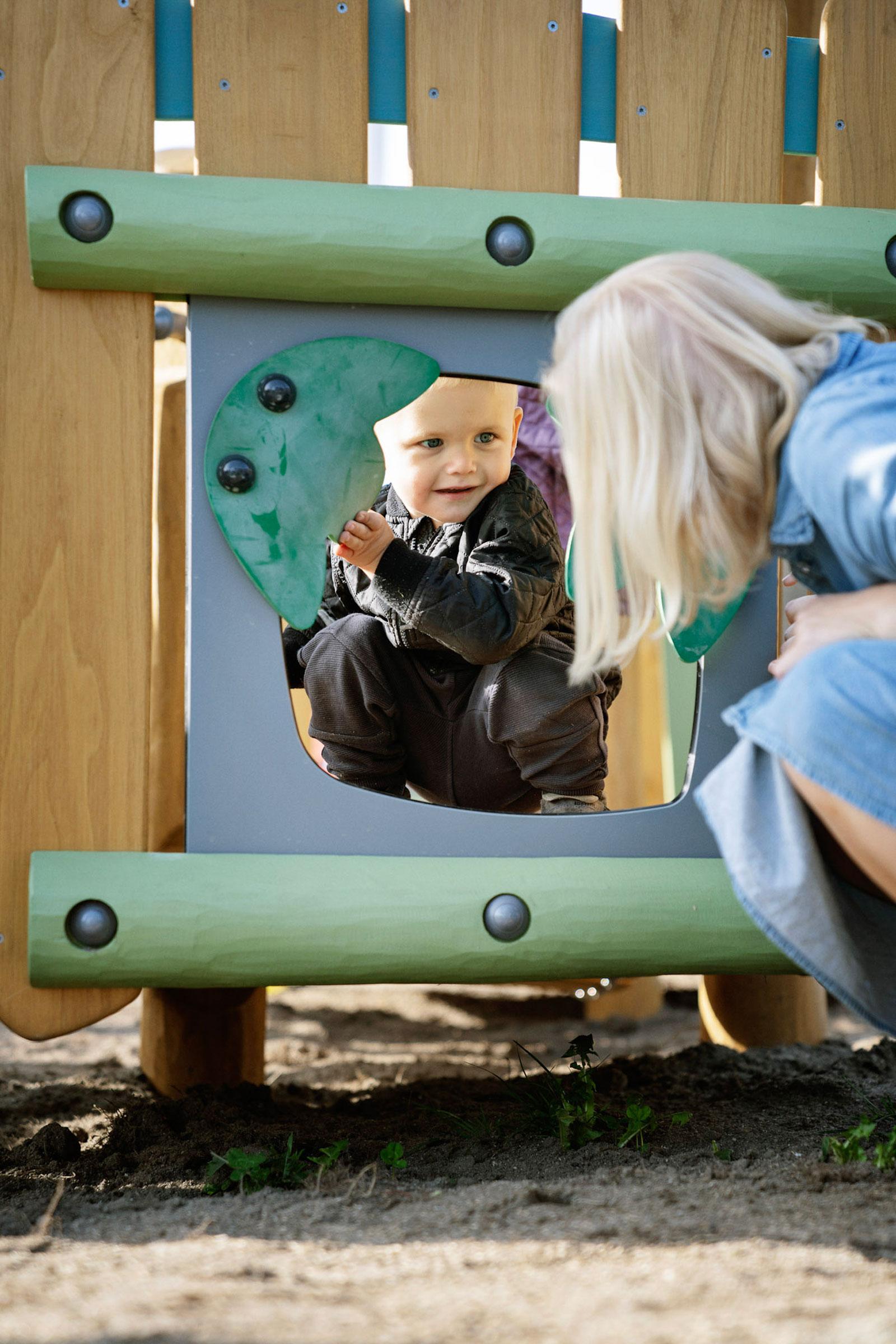
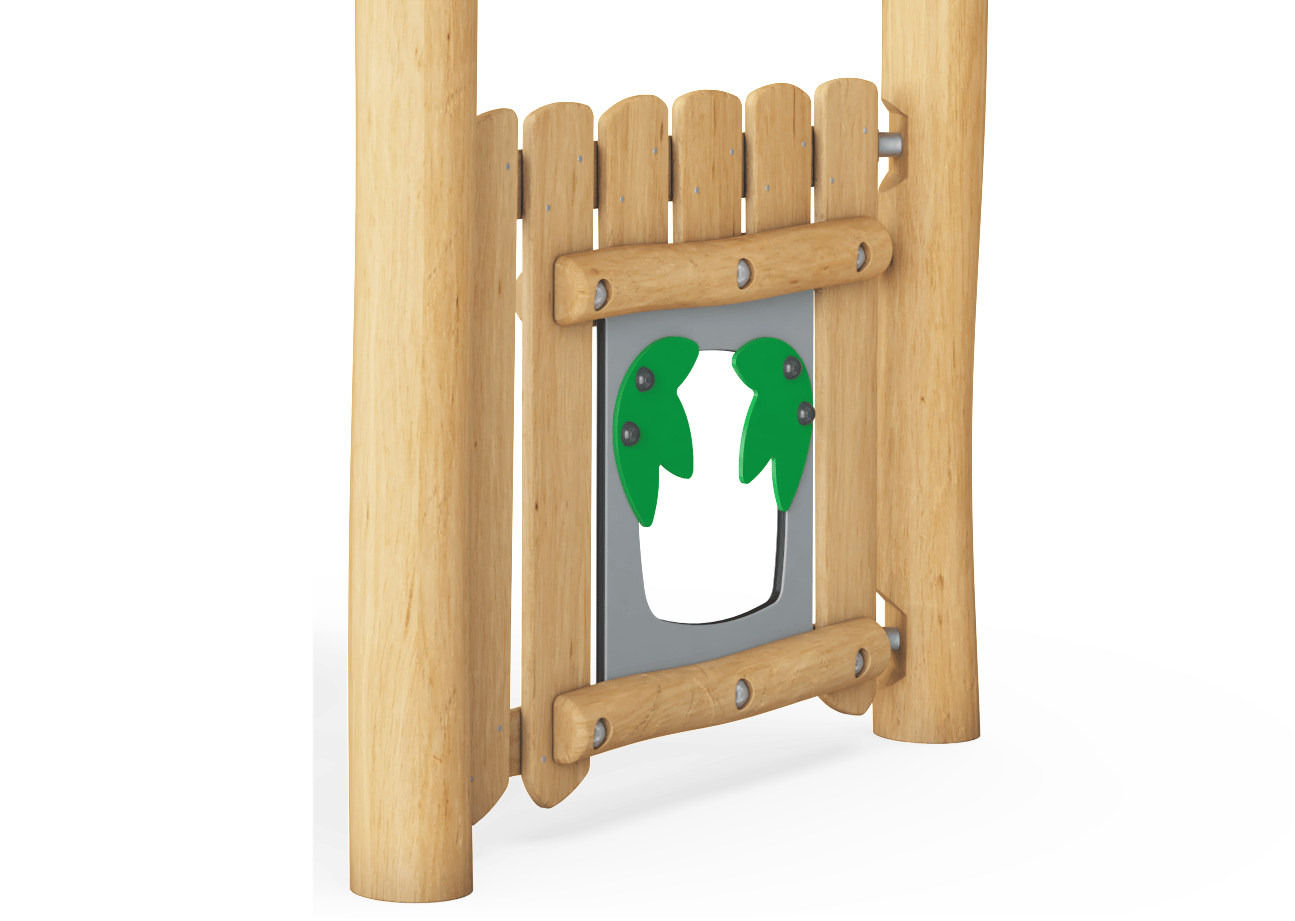
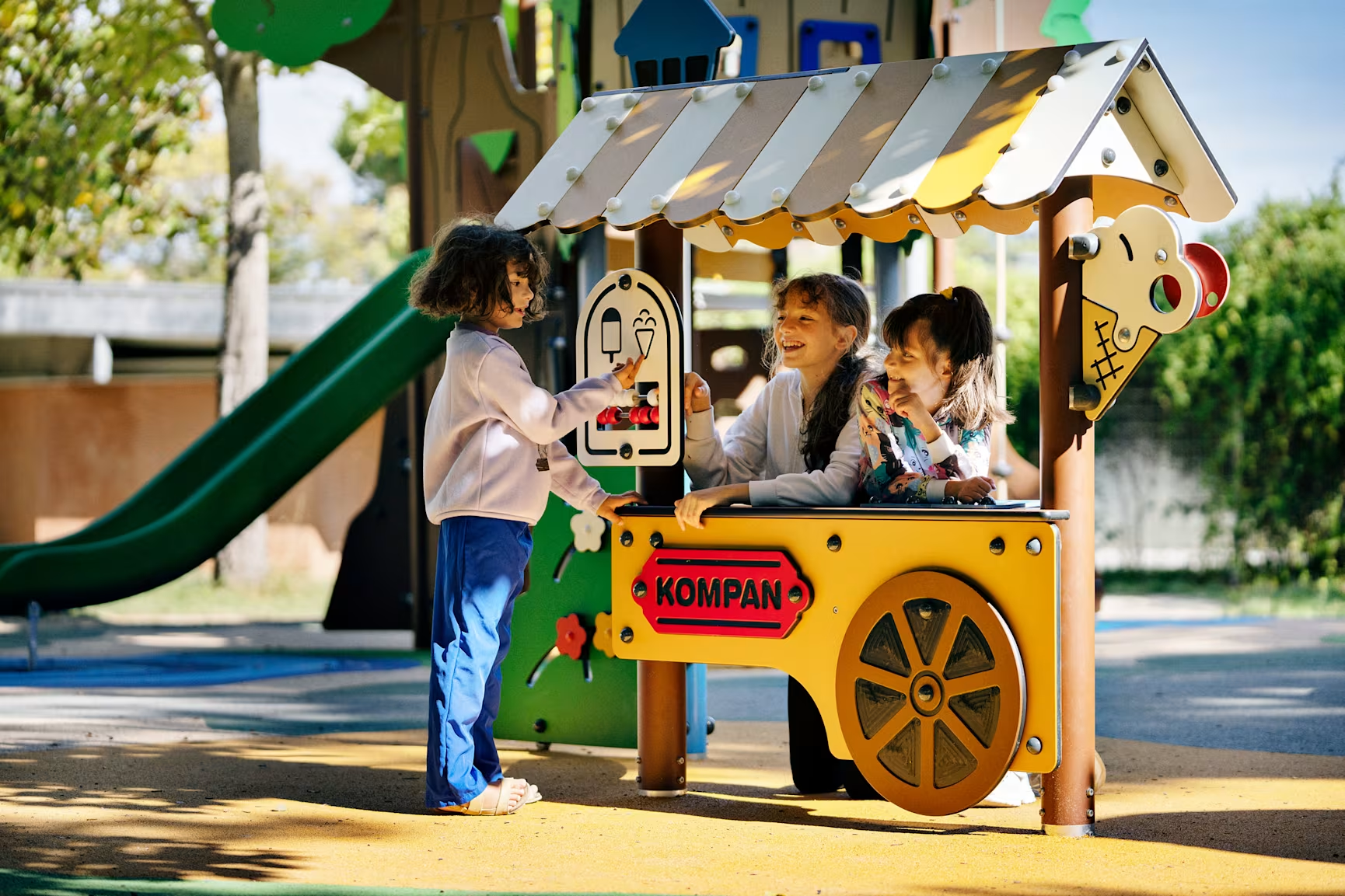
Perfectly shaped for toddlers, this activity-packed, home-themed Little Duck’s Gate will attract and excite toddler again and again. With its rich tactile features, it greatly increases play value and supports emerging dramatic play in toddlers. The desk adds to the overall transparency so that children can play together from outside and inside of the house and the side panel with yellow scoops that run in a groove encourages play that stimulates theory of mind and logical thinking skills. The leafy crawl-through panel encourages children to crawl and explore. These tactile activities stimulate cross-modal perception, important for improving reading skills, and support cross-coordination awareness which is key to physical and cognitive development at this age.
This product, Little Duck's Gate (NRO416), is provided by KOMPAN Australia.
Length
175 cm
Width
284 cm
Height
281 cm
Fall Space Length
461 cm
Fall Space Width
569 cm
Age Group
1+ Years
Key user group
1 - 4 Years
Capacity
10
Inclusive
Yes
Product category
Nature Playgrounds
Product line
Robinia Village Play Structures
Product Highlights
Quality that lasts
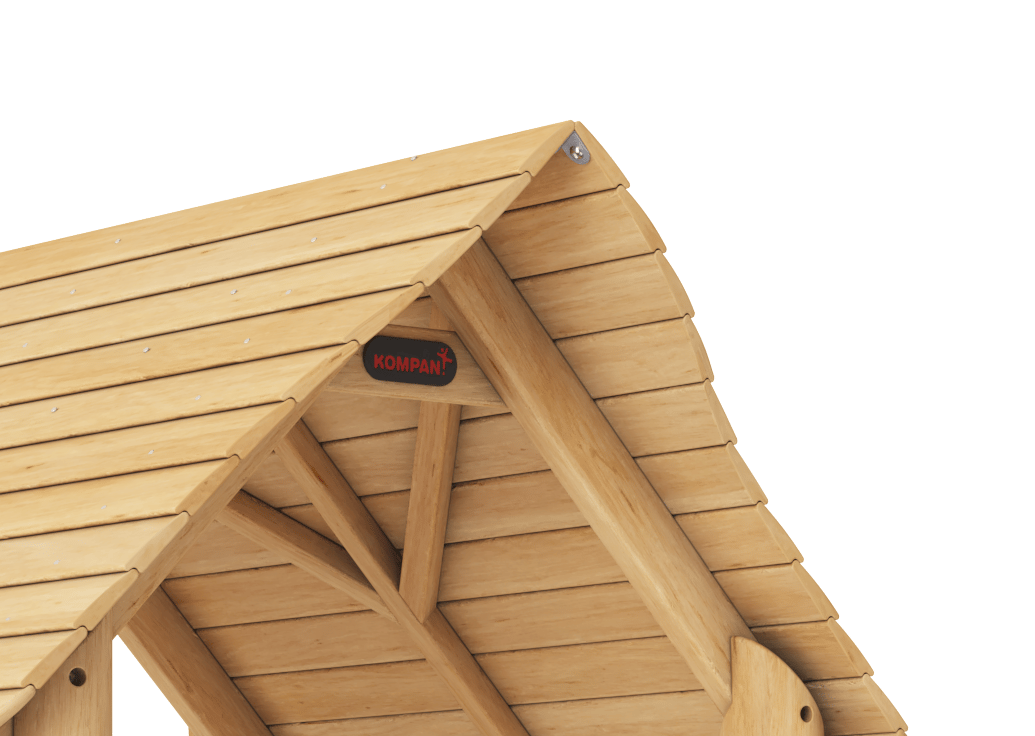
All organic Robinia products by KOMPAN are made of Robinia wood which is sourced from sustainable plantation farms. On request it can be supplied as FSC® Certified (FSC® C004450).
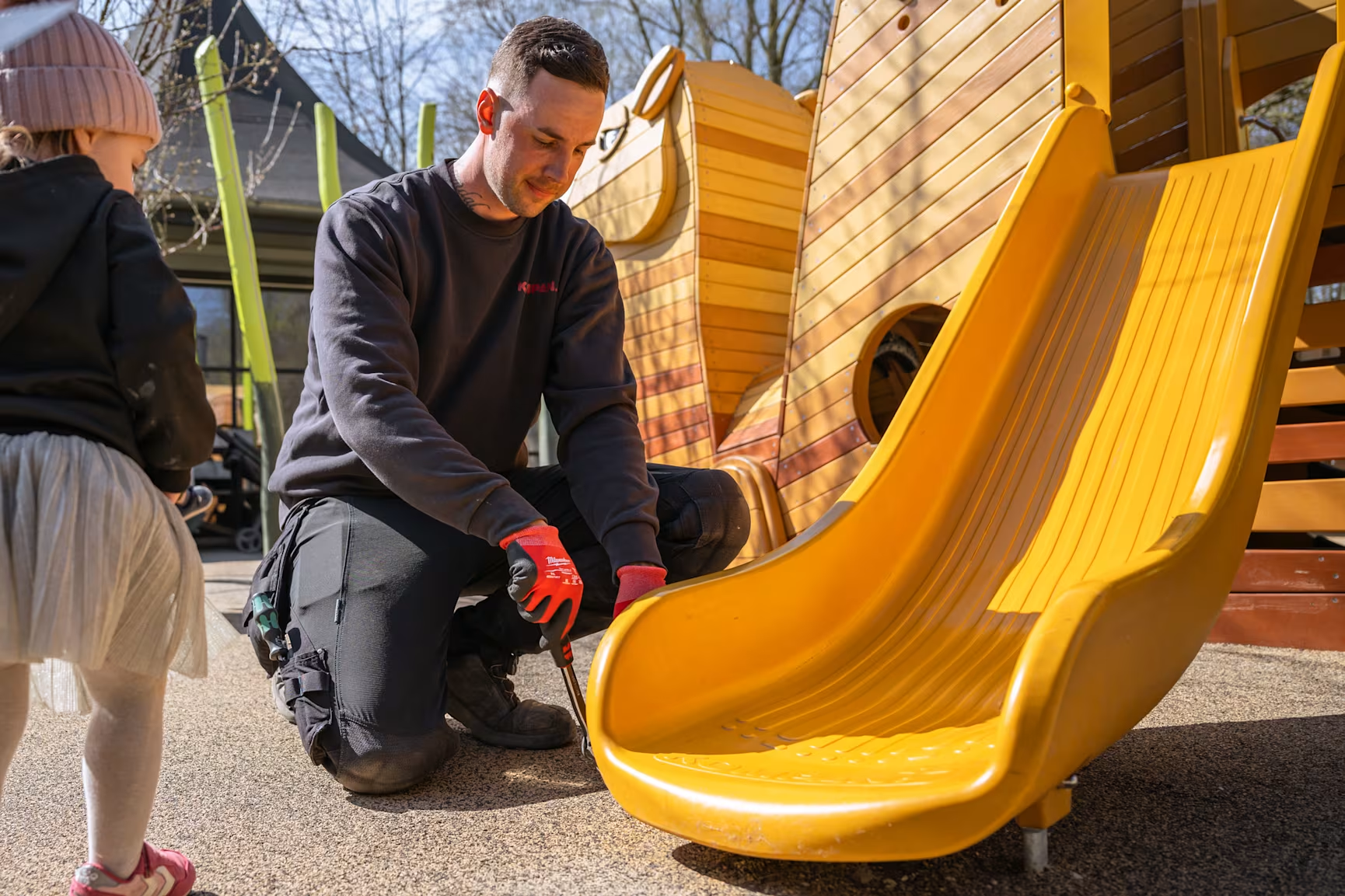
The product/activities are preassembled from the factory to ensure all safety requirements are considered.
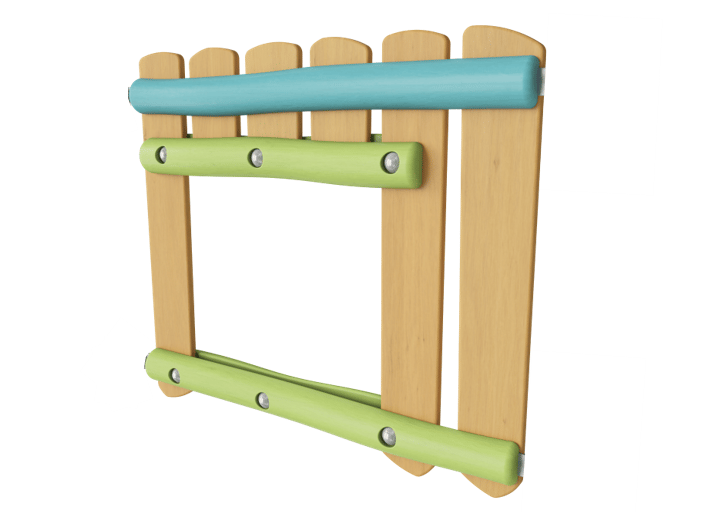
The paint used for coloured components is water-based, which is environmentally friendly and has excellent UV resistance. The paint is compliant with Australian Standards.
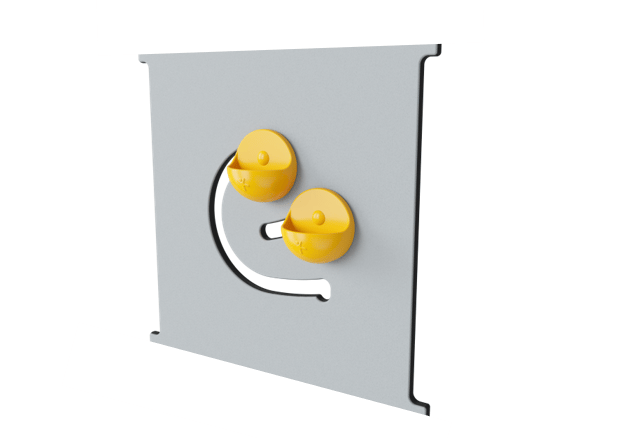
Panels of 19mm EcoCore™. EcoCore™ is a highly durable, eco-friendly material, which is not only recyclable after use but also consists of a core produced from 100% recycled material.
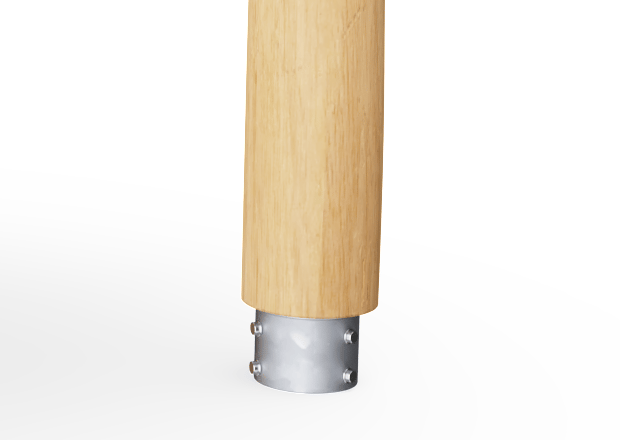
There are multiple footing options for all products: Surface anchoring with steel footings and expansion bolts, or wood in-ground or steel in-ground footings.
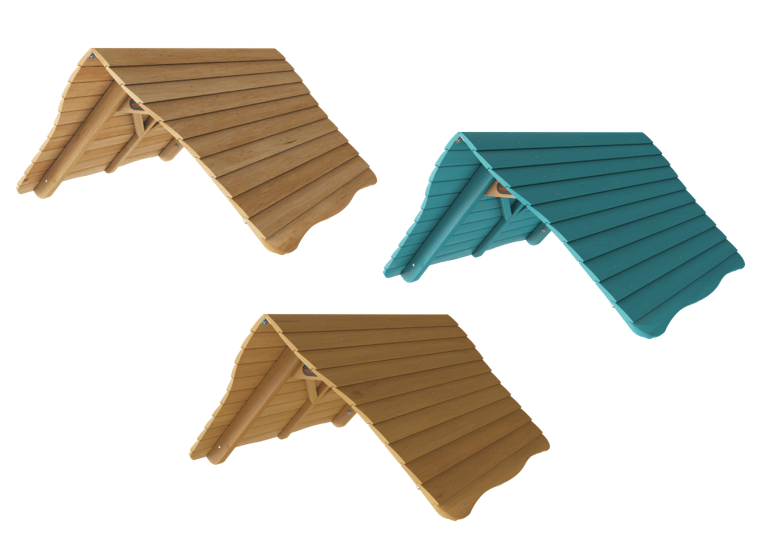
Robinia products are available in three different wood treatment options; untreated Robinia wood or brown painted with a pigment that maintains the wood colour and coloured version with paint of selected components.
Play Activities

Construct
2

Crawl
1

Pull
2

Push
2

Sensory
6

Socialise
3

Wonder
1
Each play activity represents a type of play experience, such as balancing, social interaction, climbing, or sensory exploration. The number indicates how many opportunities the product offers for children to engage in that activity. Together, these activities help create a varied and developmentally rich play experience.
CO₂ emission
Sustainability Data
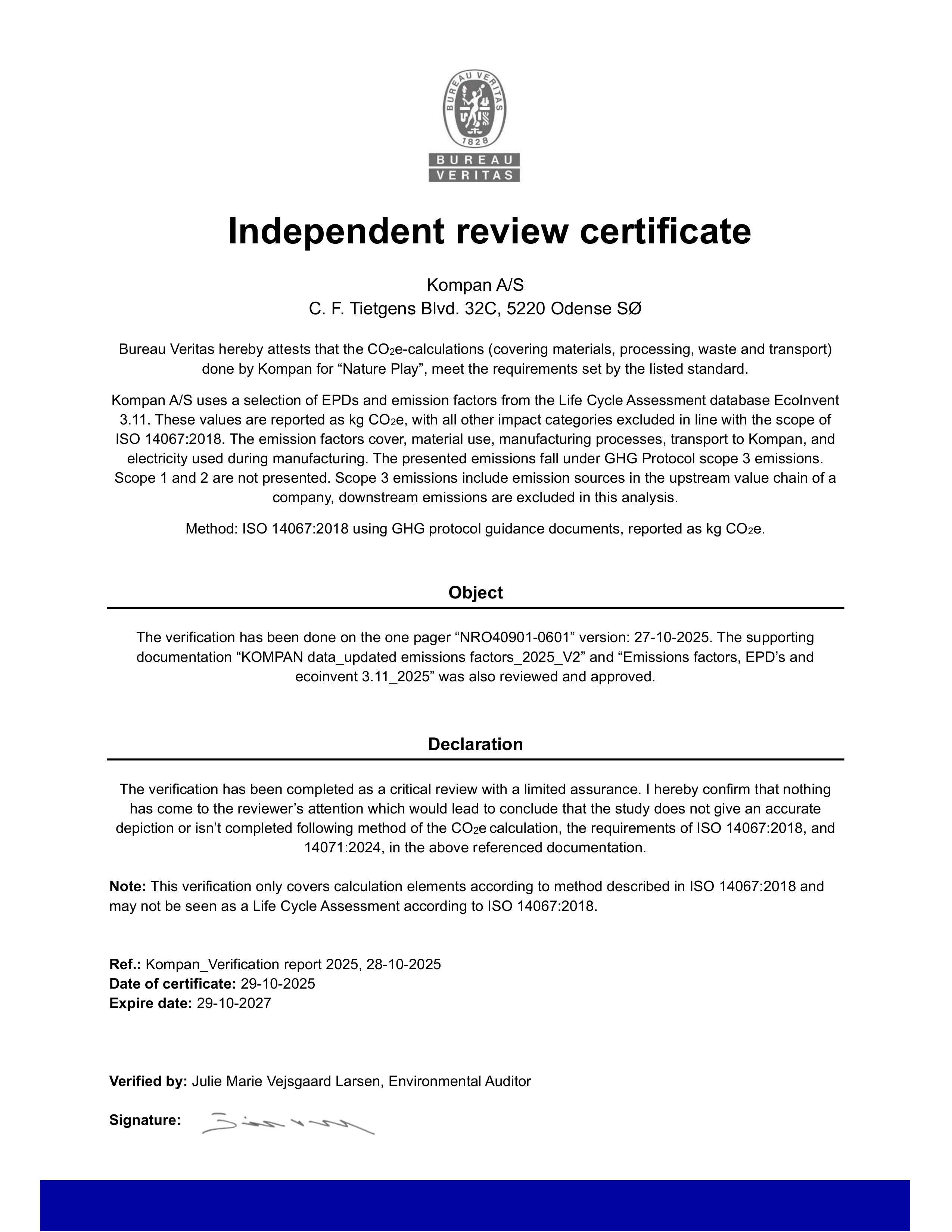
Our product and sustainability data validation help our clients make informed, sustainable buying choices based on methods validated by Bureau Veritas.
NRO416-1021
213.62
Total CO₂ emission (kg CO₂e)
0.48
CO₂e/kg (kg CO₂e/kg)
2.84%
Recycled materials
The overall framework applied for these factors is the Environmental Product Declaration (EPD), which quantifies "environmental information on the life cycle of a product and enables comparisons between products fulfilling the same function" (ISO, 2006). This follows the structure and applies a Life-Cycle Assessment approach to the entire Product stage, from raw material through manufacturing (A1-A3).