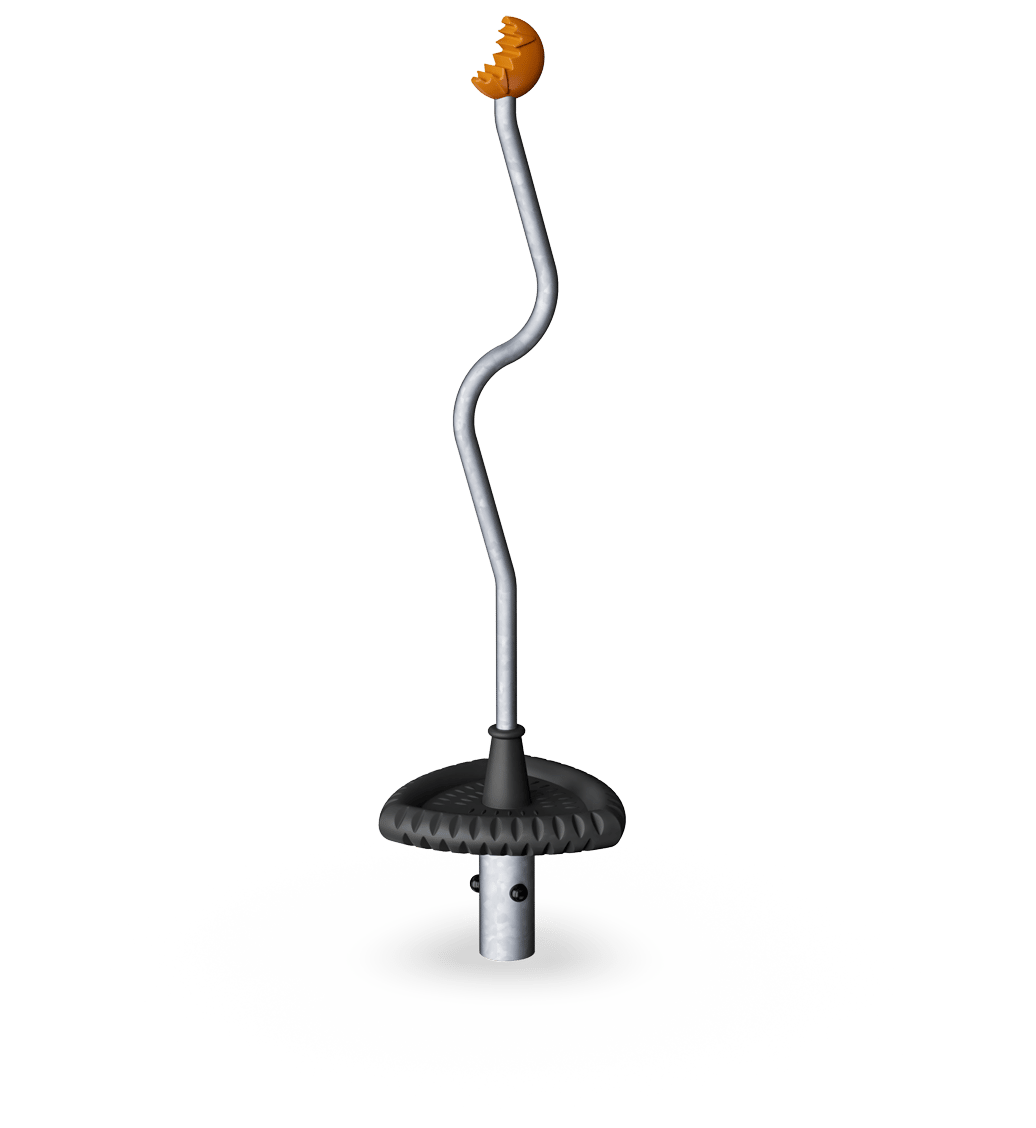


Curved pole

Physical
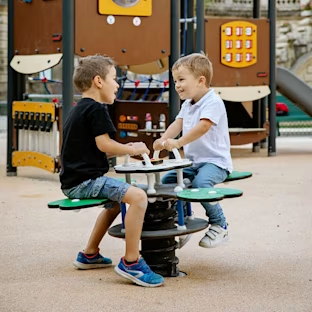
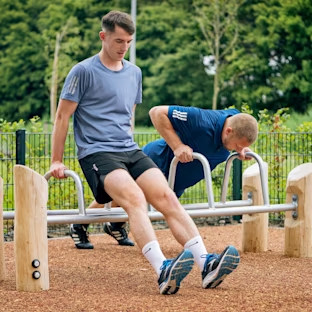
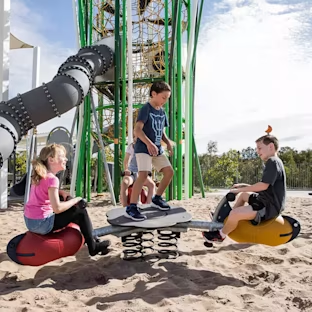
more gripping or leaning support points when standing, sitting, hanging holding tight and spinning.
GXY8016
Spica 3
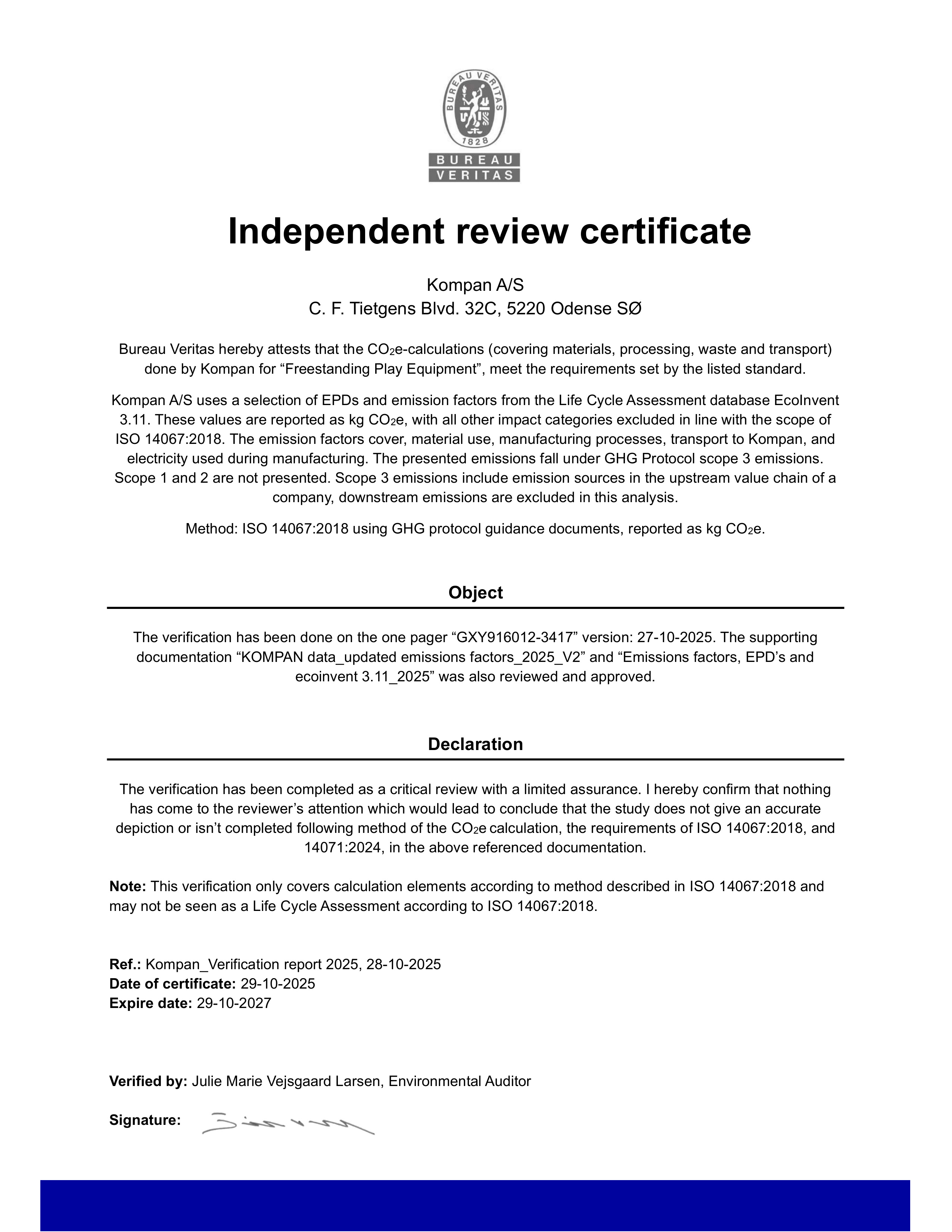
The quirky shapes, toothy top and triangle platform invite the curious 6-12 year olds to investigate the Spica. The rotation point of the Spica is at the centre and it takes...
Photos are for conceptual purpose only. Deviations can occur.
Play value is the value gained from play, the value that makes the child “want” or developmentally “need” to undertake the activity and thus gives the play item holding power. Play value can be described very precisely in developmental terms, looking into the human physical, cognitive, social and emotional developmental stages.
more gripping or leaning support points when standing, sitting, hanging holding tight and spinning.
logical thinking, figuring out how to make the spinner work with gravity, not against it.
pushing or pulling it into motion, children use their muscle strength and strengthen their cardio. The rotation develops the sense of balance and space when enjoying the ride.
listening and negotiating how slow or fast to go, children develop their empathy and cooperation skills.
turn-taking, cooperation, socializing.
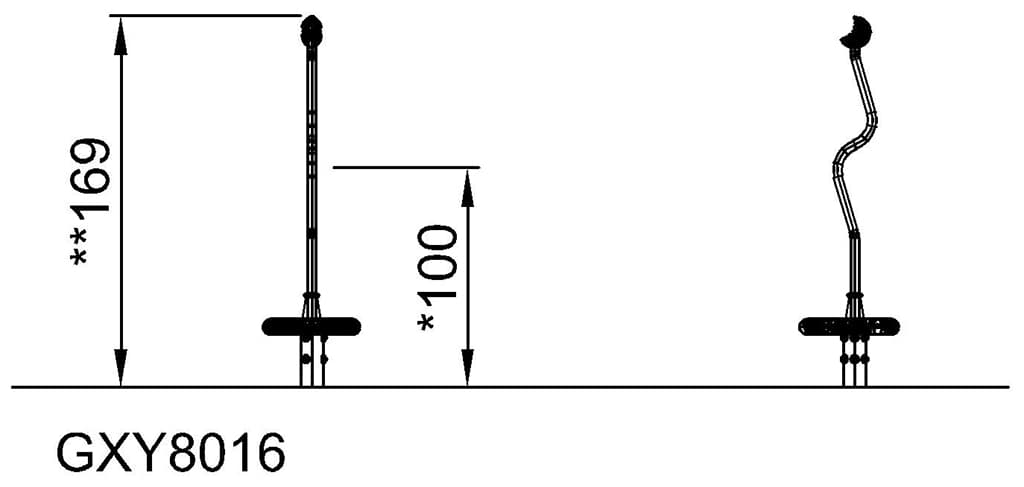
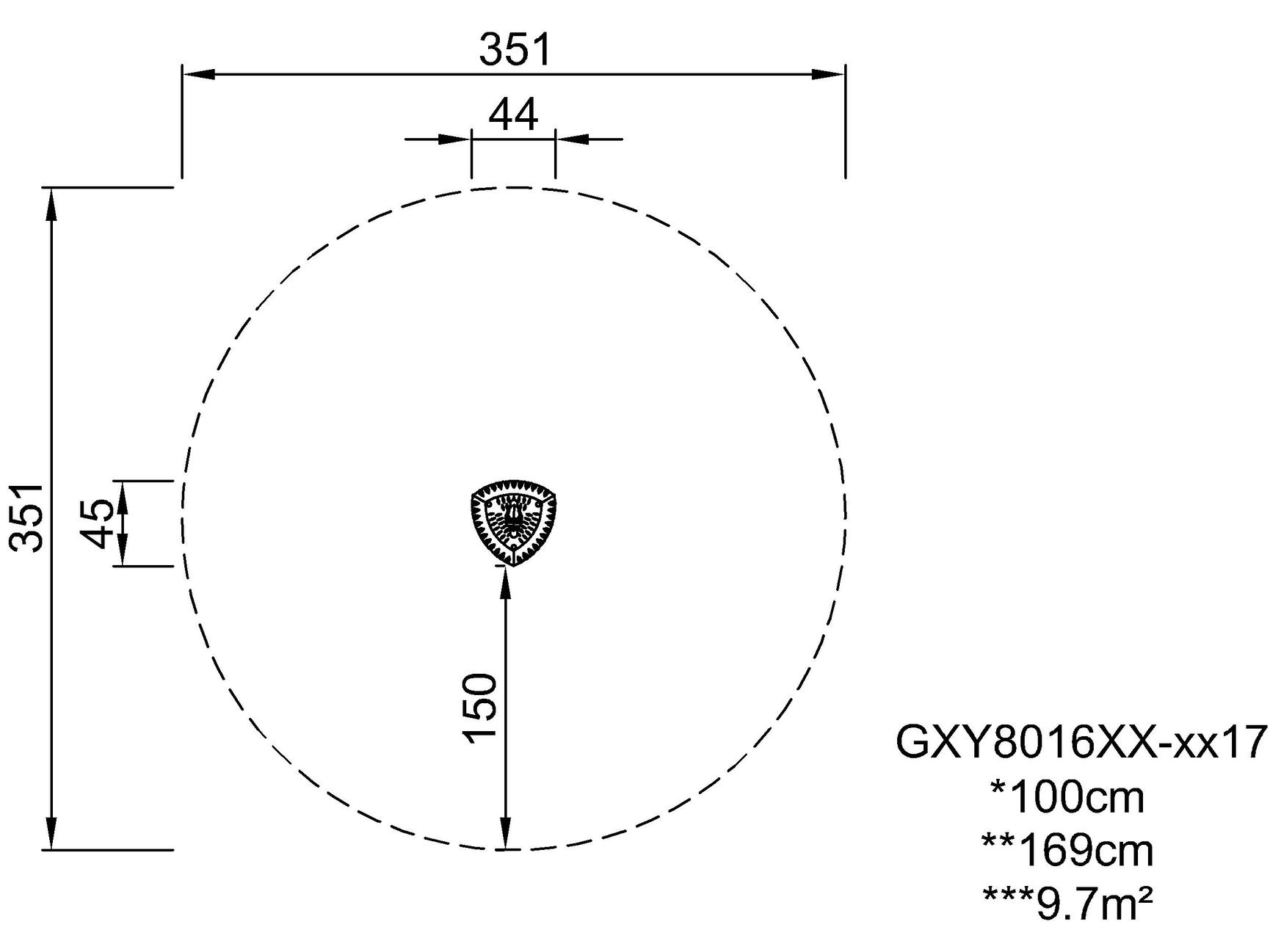
Length
44 cm
Width
45 cm
Height
169 cm
The quirky shapes, toothy top and triangle platform invite the curious 6-12 year olds to investigate the Spica. The rotation point of the Spica is at the centre and it takes exploration and problem solving to master how to spin. The curved pole can be held on to at any position and the child will figure out that leaning in to the pole will increase the spinning speed and leaning out will decrease the speed. Mastering the rotation element stimulates the cognitive skills of the child, in particular the logical thinking. The agility, balance and coordination skills are challenged as the Spica invites different body positions when spinning. The triangular shape of the seat allows room for up to three children, stimulating the social skills of cooperation and turn-taking.
This product, Spica 3 (GXY8016), is provided by KOMPAN International Sales.
The Spica bearings are installed in a one-piece design bearing house with integrated drain holes for water passage. The two large steel bearings are fully closed and lifetime lubricated.
The unique GALAXY super triangle deck plate has an inner core of galvanised steel and soft outer layer of PUR rubber. The rounded edges has a non-skid pattern for safe play.
The coloured top is made of injection moulded high quality nylon (PA6) which is UV stabilised to ensure long life time. The two component design is assembled with steel pins around the steel pipe.
The steel surfaces are hot dip galvanised inside and outside with lead free zinc. The galvanisation has excellent corrosion resistance in outside environments and requires low maintenance.
CO₂ emission
Sustainability Data
Our product and sustainability data validation help customers make informed sustainable buying choices based on methods validated by Bureau Veritas.
GXY801621-3717
159.75
Total CO₂ emission (kg CO₂e)
4.16
CO₂e/kg (kg CO₂e/kg)
40.76%
Recycled materials
The overall framework applied for these factors is the Environmental Product Declaration (EPD), which quantifies "environmental information on the life cycle of a product and enable comparisons between products fulfilling the same function" (ISO, 2006). This follows the structure and applies a Life-Cycle Assessment approach to the entire Product stage from raw material through manufacturing (A1-A3).

TENDER TEXT SPECIFICATIONS
Do you want to include this specific product in your project, and are you looking for detailed material information to help you specify? We have all the documentation you need. Fill out this form, and we will contact you with the relevant information you need.
If you have any questions regarding this specific product or your project, we are here to help!