

Handholds

Physical
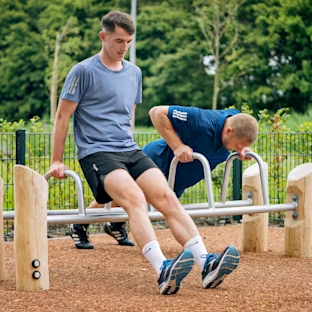
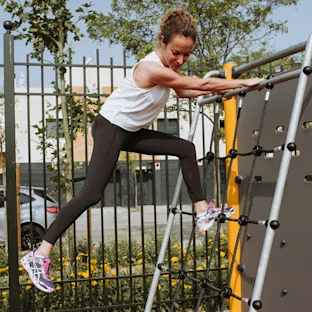
gripping the handle to pull up your body trains hand-eye coordination and muscles.
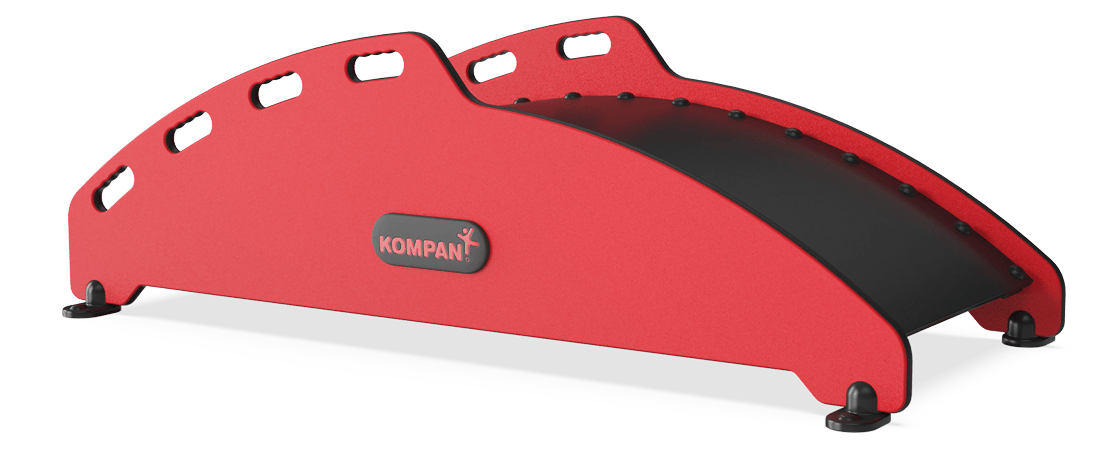
MSV605
Low Slope
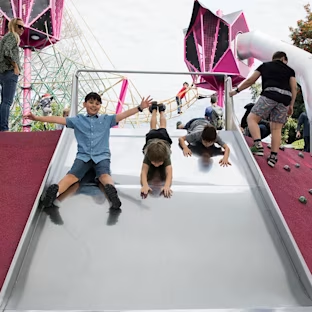
The low slope is a fantastic motivator for play that helps to build strength, balance and coordination for young children. The intentional design helps children to feel successful...
The products might not be exactly as shown
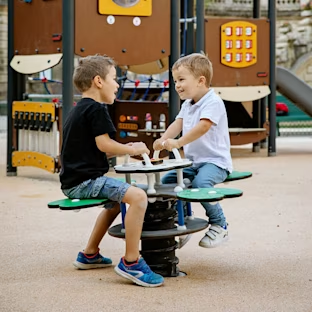
Play value is the value gained from play, the value that makes the child “want” or developmentally “need” to undertake the activity and thus gives the play item holding power. Play value can be described very precisely in developmental terms, looking into the human physical, cognitive, social and emotional developmental stages.
gripping the handle to pull up your body trains hand-eye coordination and muscles.
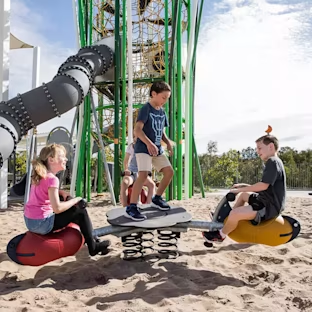
sense of balance and space are supported when moving up. Cross coordination can be developed when crawling over. Bone density is strengthened when jumping off.
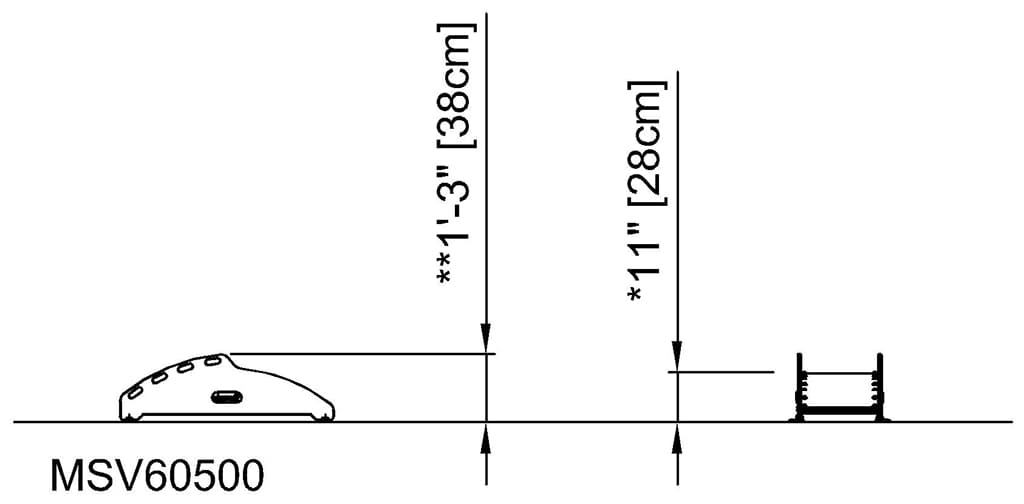
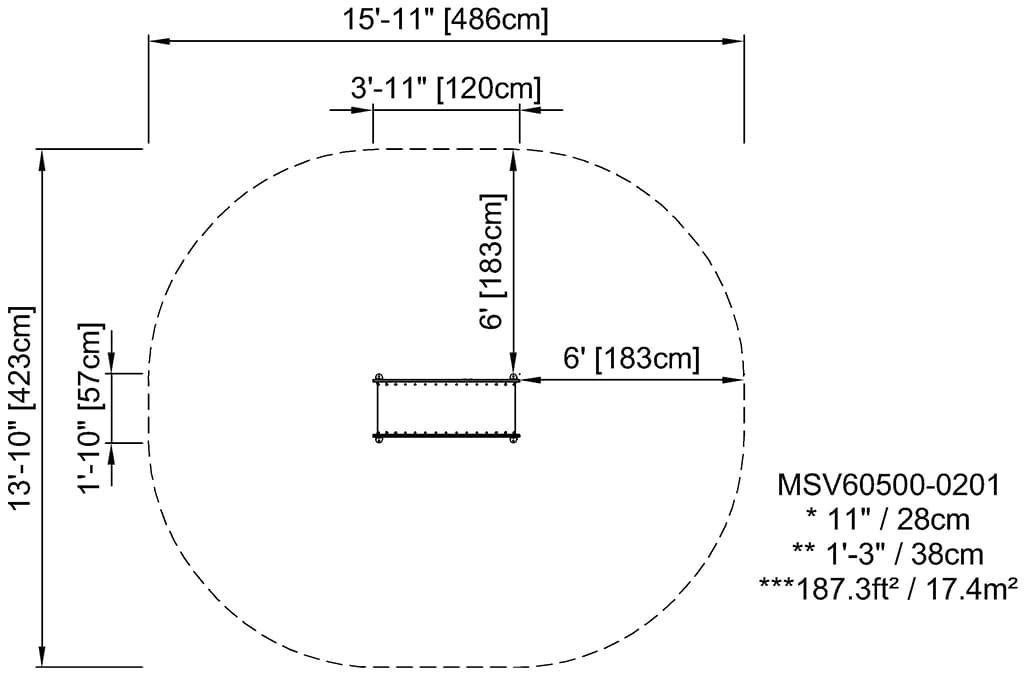
Length
120 cm
Width
56 cm
Height
38 cm
The low slope is a fantastic motivator for play that helps to build strength, balance and coordination for young children. The intentional design helps children to feel successful and competent, while also supporting social skills such as turn-taking and cognitive skills such as decision-making. These skills are important for overall health and well-being. Children can gain a wealth of skills through play on the low slope, as they practice their balance and strengthen their muscles with friends, as they take turns and share in games that help them to enjoy success. The low slope will help to extend playtimes for healthy development and great fun.
This product, Low Slope (MSV605), is provided by KOMPAN Canada.
Panels of 19mm CircularHDPE. CircularHDPE is a highly durable, eco-friendly material, which is not only recyclable after use, but also consists of material produced from +95% recycled post-consumer material from food packing waste.
Membranes consist of friction-proof rubberized material of conveyor belt quality with excellent UV resistance. Embedded is a four-layered armouring made of woven polyester. The armouring and the two surface layers result in a total thickness of 9 mm.
CO₂ emission
Sustainability Data
Our product and sustainability data validation help customers make informed sustainable buying choices based on methods validated by Bureau Veritas.
MSV60500-0201
62.11
Total CO₂ emission (kg CO₂e)
2.84
CO₂e/kg (kg CO₂e/kg)
63.73%
Recycled materials
The overall framework applied for these factors is the Environmental Product Declaration (EPD), which quantifies "environmental information on the life cycle of a product and enables comparisons between products fulfilling the same function" (ISO, 2006). This follows the structure and applies a Life-Cycle Assessment approach to the entire Product stage from raw material through manufacturing (A1-A3).

TENDER TEXT SPECIFICATIONS
Do you want to include this specific product in your project, and are you looking for detailed material information to help you specify? We have all the documentation you need. Fill out this form, and we will contact you with the relevant information you need.
If you have any questions regarding this specific product or your project, we are here to help!