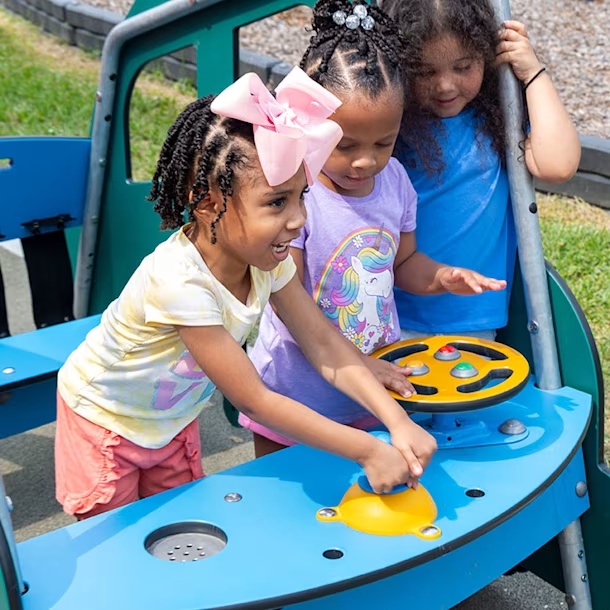
Early Childhood Playgrounds
A well‑planned early‑childhood playground nurtures active movement and essential developmental skills. Choosing age‑appropriate, sensory‑rich equipment creates a safe, engaging space where children across Canada can grow physically, socially, and cognitively.
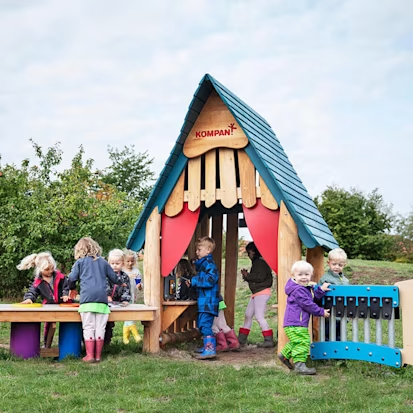
Explore our outdoor play equipment for 2- 5-year-olds—like the Couple Deluxe pictured to the right—and get started with your playground planning!
How a Playground Can Make Your Preschool Better
A preschool playground is not only fun for children—it also supports your program in practical, meaningful ways.
Children learn to listen and follow directions (like waiting their turn or following simple rules), which makes classroom time easier for everyone.
Playtime teaches routine and transitions, so children get better at switching between activities—a skill that helps them (and their teachers) every day.
Playing outside uses up their energy and helps them focus later, so they’re more ready to sit, listen, and learn when they come back inside.
Parents see their children growing and playing well together, which makes them feel good about choosing your preschool.
Designing a Preschool Playground that Fits Your Needs
From small to large, here's how to create your ideal preschool playground.
2. Select Smart Surfacing
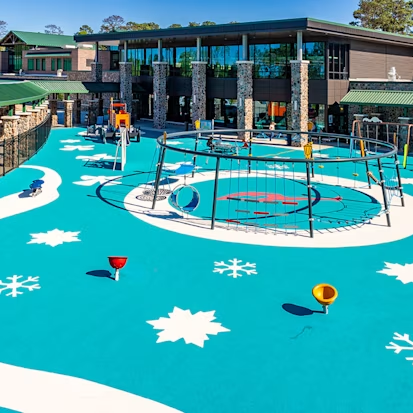
Quality surfacing is key to safe, accessible play. Poured‑in‑place rubber is a strong choice for Canadian early‑childhood spaces, offering reliable impact protection, smooth mobility access, and customizable colours that help define engaging play zones.
3. Plan for Longevity
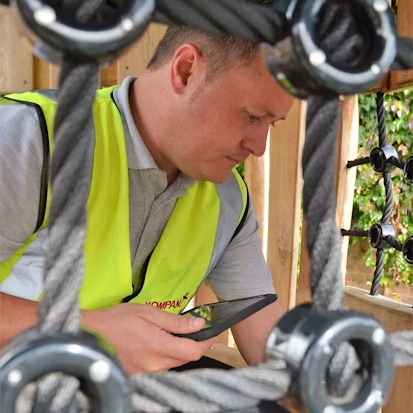
Proper planning and maintenance keeps preschool playgrounds safe and reliable. Partnering with trained installers and choosing durable, low‑maintenance materials helps reduce future repairs, while routine checks ensure predictable costs and keep the space ready for daily use.
How Playgrounds Help Preschoolers Grow
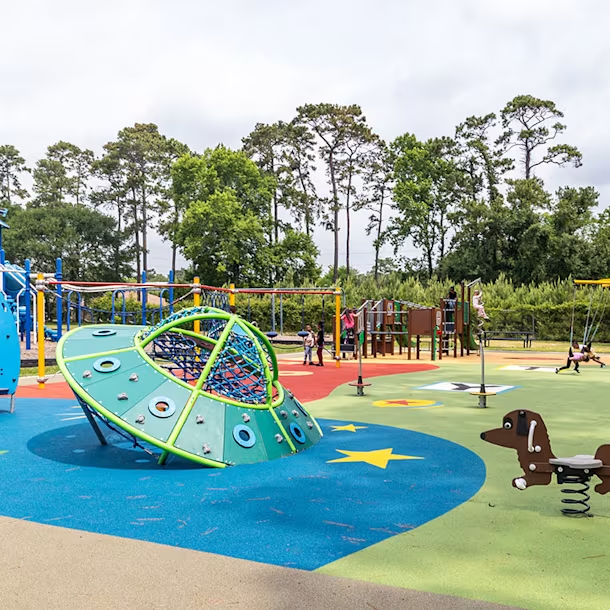
Toddlers and preschoolers grow through play. Preschool playgrounds matter because these early play spaces teach movement, social skills, and emotional control. Scaled climbers, balance paths and sensory corners provide toddlers and preschoolers with safe opportunities to test their bodies, practice sharing, and calm big feelings—building confidence and friendships, one curious step at a time.
Building Confidence in Movement: Low climbers, balance beams, and stepping stones help toddlers navigate their bodies in space, reducing clumsiness and building the courage to try new physical challenges.
Risk-taking in a Safe Space: Preschoolers learn to assess small risks (e.g., climbing a smaller platform) in a controlled environment, fostering independence and resilience.
Cooperative Play: Preschoolers move beyond parallel play to collaborative games (e.g., taking turns on a nest swing), teaching patience, communication, and teamwork.
Empathy and Friendship: Shared play equipment (e.g., a small slide or seesaw) encourages children to notice peers’ needs, like waiting their turn or helping a friend climb.
Emotional Regulation: Outdoor play helps children manage big feelings—running, jumping, and sensory activities like digging in sand provide outlets for frustration or excitement.
Unstructured Exploration: Loose elements like sticks, balls, and fabric scraps (in supervised settings) allow children to invent games, fostering creativity and adaptability.
Plan Your Preschool Playground


Frequently Asked Questions
Poured‑in‑place (PIP) rubber surfacing offers the highest level of consistent safety and accessibility. It provides reliable fall protection in high‑use areas without shifting or compacting over time and supports mobility devices and strollers. While it requires a higher upfront investment, its durability and low ongoing maintenance make it a dependable, long‑term safety solution for early childhood settings.
Clear, age‑appropriate choices help mixed‑age groups play together safely. Prioritize accessible ground‑level activities, add gentle elevated options, and use visual cues to organize zones. Strong sightlines and sensory variety support safe, engaging early‑years play across Canada.
From Early Childhood to Secondary School
From toddlers to teenagers, we create school playgrounds that fit all ages, levels, and abilities throughout their school years.
Early Childhood
Elementary Schools
Middle & High Schools
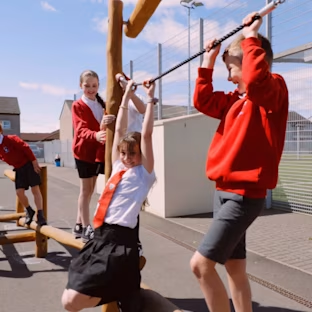
Inclusive School Playground Equipment
Educational Playground Equipment
Colleges & Universities
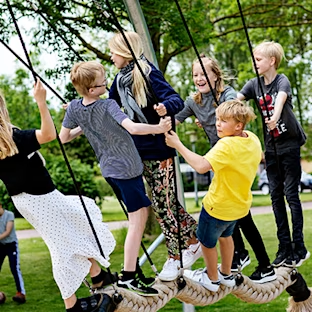
Schools