
Rock climber

Physical
supports cross coordination and leg, arm and hand strength.

Social-Emotional
the inclination makes climbing feel secure, especially for younger children.
KPL3012
Triple Tower
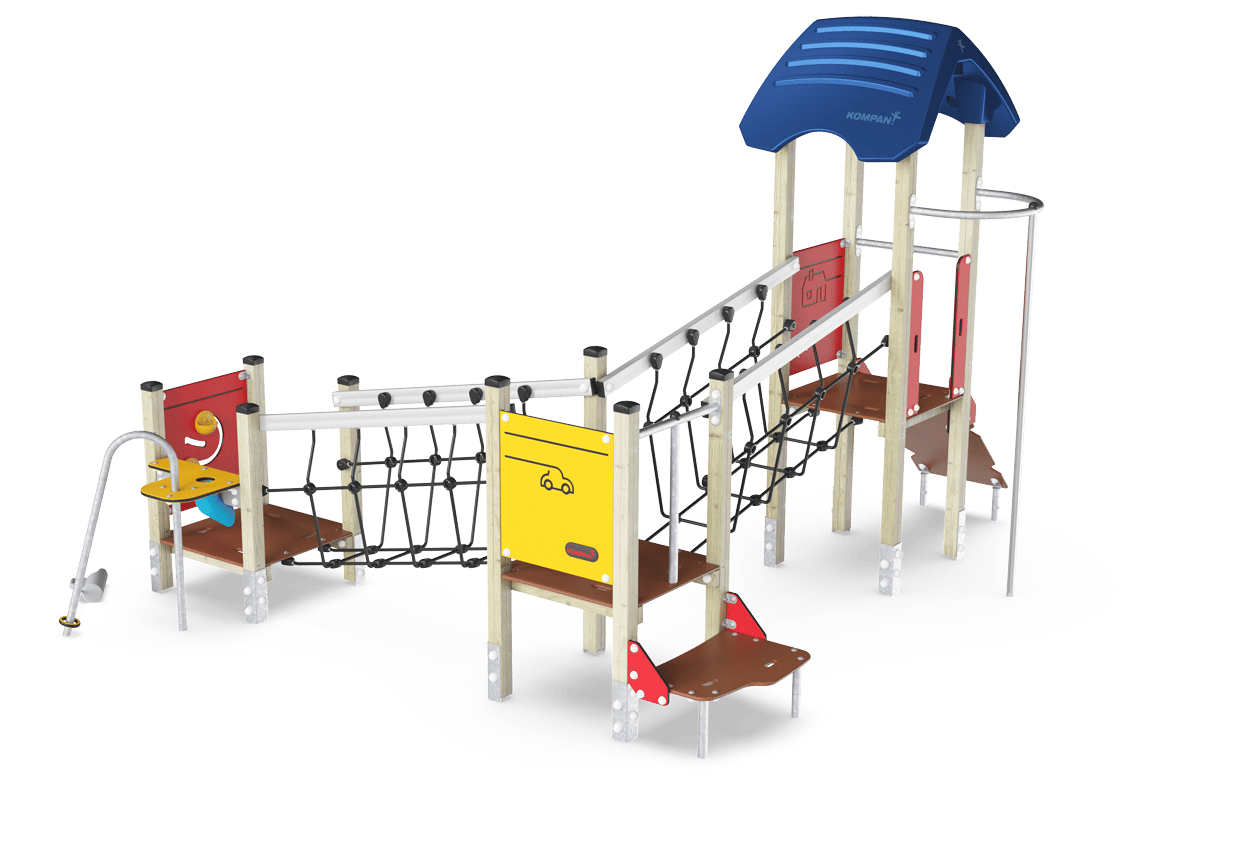
The Triple Tower play unit is a playground classic that offers varied climbing and crawling as well as ground level explorative play and takes up little space. Children will play...
Play value is the value gained from play, the value that makes the child “want” or developmentally “need” to undertake the activity and thus gives the play item holding power. Play value can be described very precisely in developmental terms, looking into the human physical, cognitive, social and emotional developmental stages.
supports cross coordination and leg, arm and hand strength.
the inclination makes climbing feel secure, especially for younger children.
coordination is supported when going down, as well as arm and core muscles. Landing strengthens bone density, which is built for life in early childhood.
turn-taking and risk-taking.
young children develop their understanding of space, speed and distances when gliding down fast.
walking the open net up or downwards develops balance, spatial awareness and cross coordination.
interaction with children outside, socializing. Cooperation and consideration, e.g. when passing others.
hand eye coordination and push-pull movements.
invites cooperation due to the two-sidedness and provides for parallel play.
logical thinking: cause and effect understanding when running scoops in grooves or shifting materials from scoop to scoop.
shifting scoops, creating new scoop positions.
trains cooperation and turn-taking as children put materials into the funnel.
the passing of materials through funnels supports the children's logical thinking and for younger children the understanding of object permanence: that materials don't vanish but run through at the other end.
develops dexterity and upper body muscles.
understanding of object permanence, emptying and filling scoop.
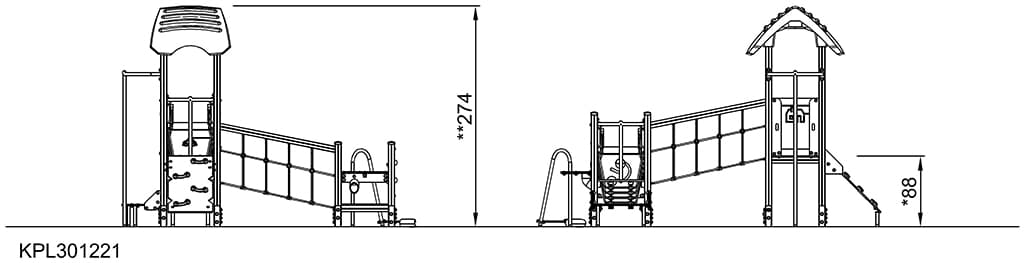
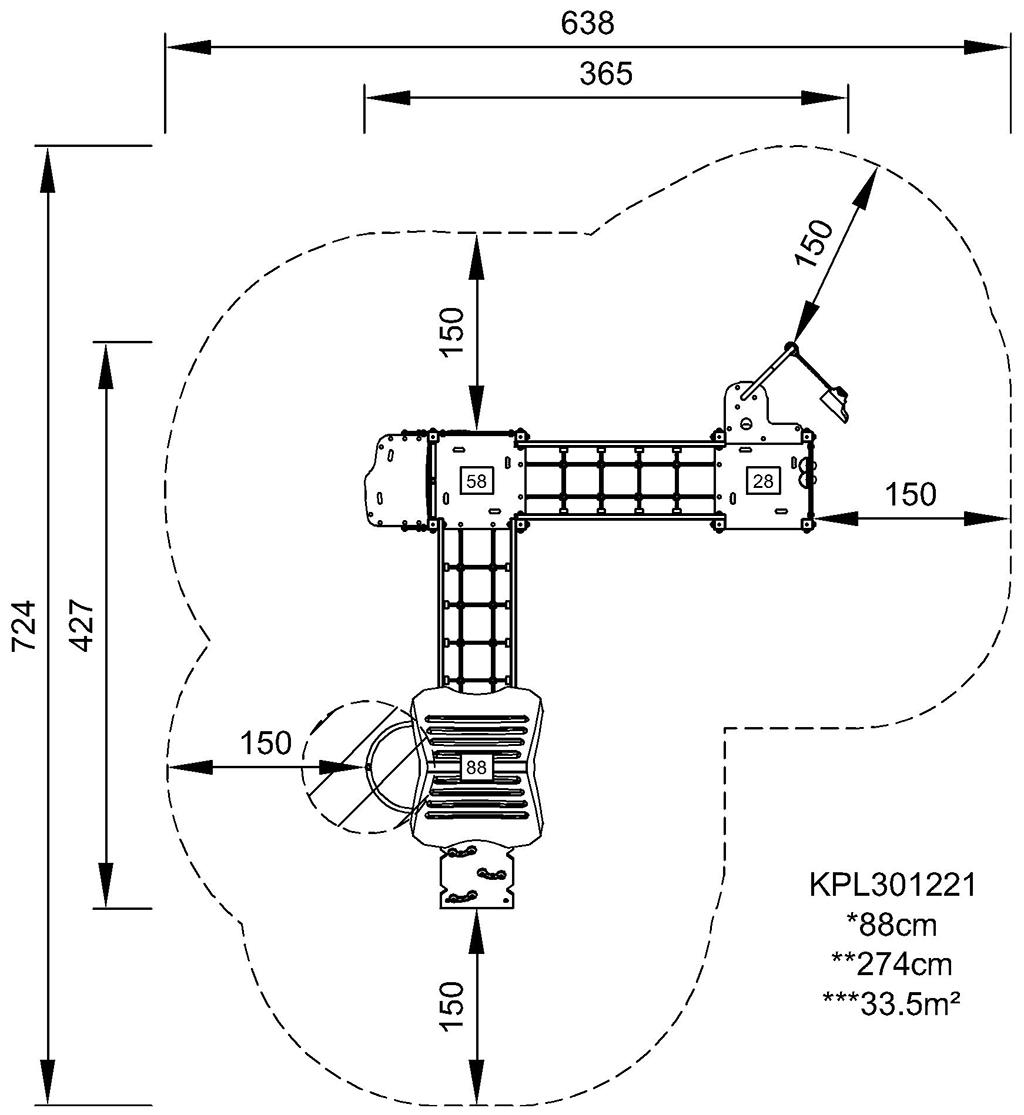
Length
365 cm
Width
427 cm
Height
274 cm
The Triple Tower play unit is a playground classic that offers varied climbing and crawling as well as ground level explorative play and takes up little space. Children will play here again and again. The varied accesses with climbing wall and step lead to transparent rope bridges that train children's spatial awareness when they cross them. The ability to socialize with children on ground level thanks to the transparency of the bridges inspires multiple play scenarios. The thrilling fireman's pole offers a fast ride to the ground, and apart from being stomach-tickling fun, it also trains the child's spatial awareness as well as their hand and arm muscles. Play units are popular, and their support and motivation to play are life skill enhancing for children.
This product, Triple Tower (KPL3012), is provided by KOMPAN Malaysia.
Panels of 19mm CircularHDPE. CircularHDPE is a highly durable, eco-friendly material, which is not only recyclable after use, but also consists of material produced from +95% recycled post-consumer material from food packing waste.
The main tower posts of either pine wood or aluminium are all equipped with hot dip galvanised steel footings. The steel footings elevates the posts 20mm from ground level to avoid contact with surfacing material.
Floors and panel activities are available in two types of material: Waterproof plywood decks, thickness 16mm from pine and alder wood with anti-slip film on both sides. High Pressure Laminate HPL thickness 17.8mm with slip-resistant surface texture according to EN 438-6.
The large hollow components are made of 100% recyclable PE. The roof displayed is moulded in one piece with minimum 5,5mm wall thickness to ensure high durability in all climates around the world.
The slides can be chosen in six different colours and three materials: Straight or curved one-piece moulded PE slides, made from 33% recycled post-consumer materials in different colours. Combined CircularHDPE sides and stainless-steel. Full stainless steel in a one-piece design for greater vandalism resistance.
The stainless-steel activities are made of high-quality stainless steel. The steel is cleaned by a total pickling process after manufacturing to ensure a smooth and clean gliding surfaces.
CO₂ emission
Sustainability Data
Our product and sustainability data validation help customers make informed sustainable buying choices based on methods validated by Bureau Veritas.
KPL301221-0901
860.54
Total CO₂ emission (kg CO₂e)
3.05
CO₂e/kg (kg CO₂e/kg)
31.18%
Recycled materials
The overall framework applied for these factors is the Environmental Product Declaration (EPD), which quantifies "environmental information on the life cycle of a product and enable comparisons between products fulfilling the same function" (ISO, 2006). This follows the structure and applies a Life-Cycle Assessment approach to the entire Product stage from raw material through manufacturing (A1-A3).
TENDER TEXT SPECIFICATIONS
Do you want to include this specific product in your project, and are you looking for detailed material information to help you specify? We have all the documentation you need. Fill out this form, and we will contact you with the relevant information you need.
If you have any questions regarding this specific product or your project, we are here to help!