

Rock climber

Physical
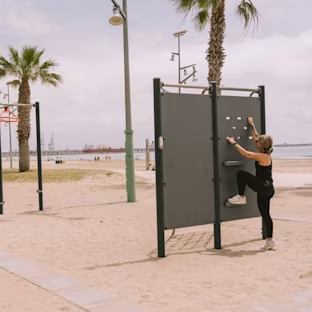
supports cross coordination and leg, arm and hand strength.

Social-Emotional
the inclination makes climbing feel secure, especially for younger children.
KPL2012
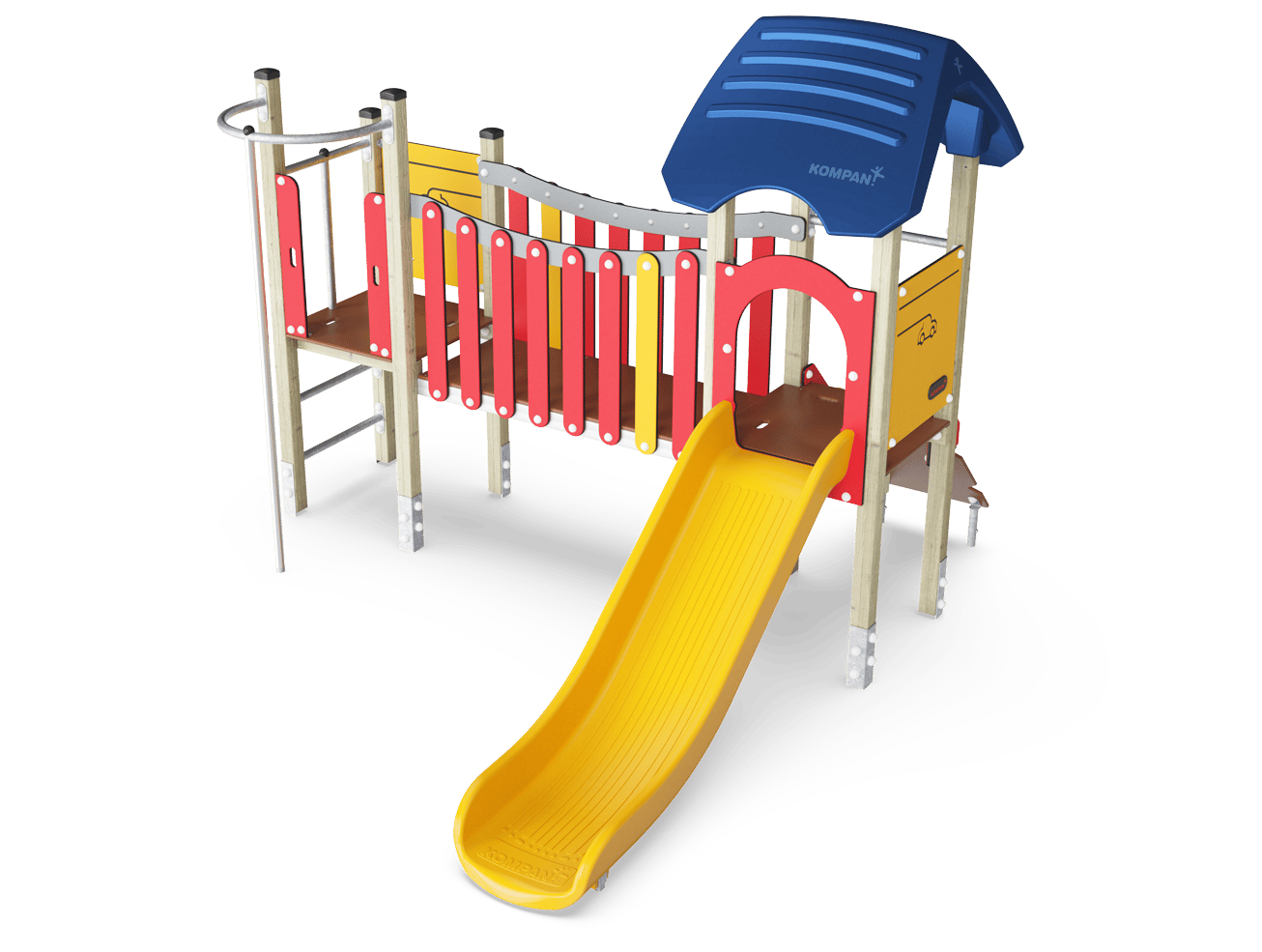
Double Tower with Bridge
The Double Tower With Bridge offers attractive play variation to make children play for a long time. The access points have varied difficulty and thrill levels, as well as the...
Photos are for conceptual purpose only. Deviations can occur.
Play value is the value gained from play, the value that makes the child “want” or developmentally “need” to undertake the activity and thus gives the play item holding power. Play value can be described very precisely in developmental terms, looking into the human physical, cognitive, social and emotional developmental stages.
supports cross coordination and leg, arm and hand strength.
the inclination makes climbing feel secure, especially for younger children.
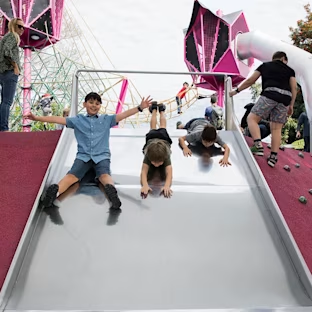
sliding develops spatial awareness and a sense of balance. Furthermore, the core muscles are trained when sitting upright going down.
empathy stimulated by turn-taking.
young children develop their understanding of space, speed and distances when sliding down quickly.
cross coordination, spatial awareness.
transparency invite cooperation with children on the outside.
coordination is supported when going down, as well as arm and core muscles. Landing strengthens bone density, which is built for life in early childhood.
turn-taking and risk-taking.
young children develop their understanding of space, speed and distances when gliding down fast.
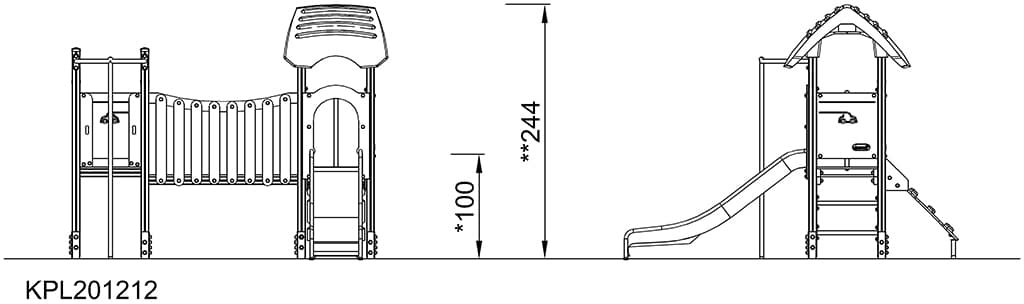
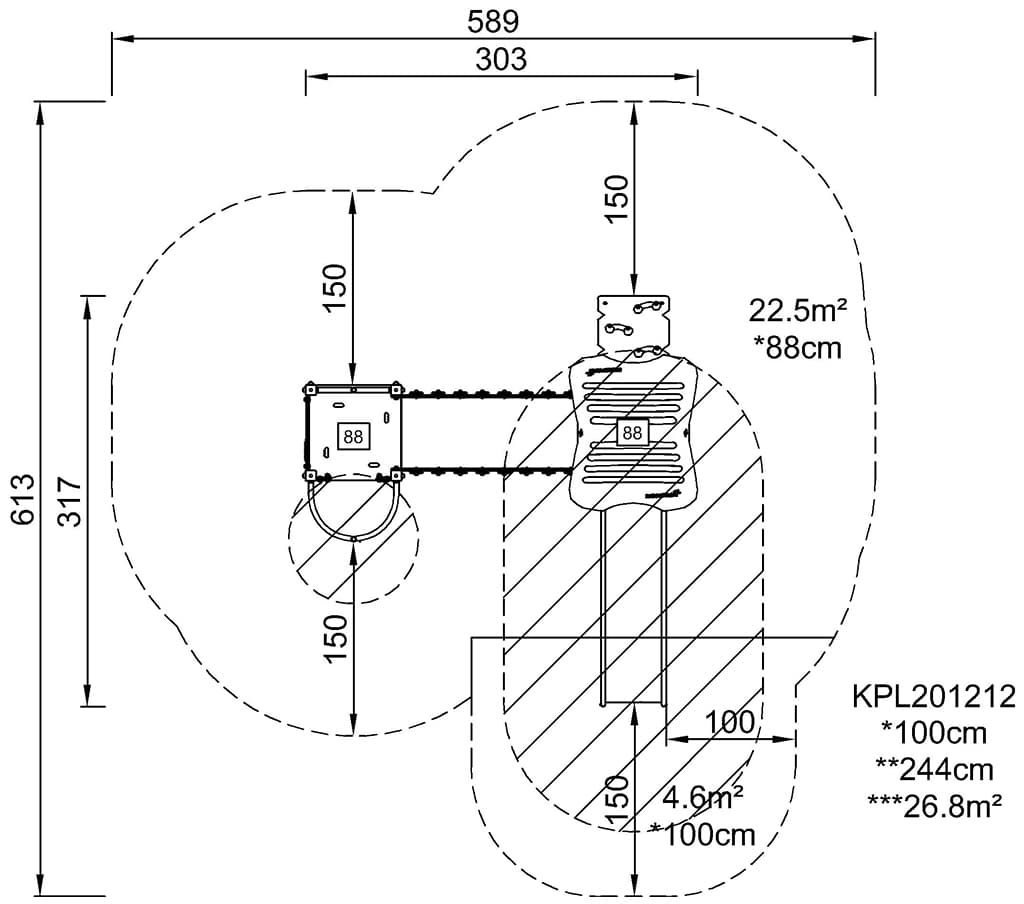
Length
303 cm
Width
317 cm
Height
244 cm
The Double Tower With Bridge offers attractive play variation to make children play for a long time. The access points have varied difficulty and thrill levels, as well as the egresses: The fireman’s pole is for more seasoned players, training risk-taking and proprioception. For children who want to play it safer the slide section allows for high-paced, cardio and balance-packed looping. The bridge invites thrilling balance training with friends, encouraging cooperation and consideration. It also trains the senses of balance and space, important For managing the world securely. The spacious bridge area allows for multiple meetings with friends. The open design invites interaction with friends on the ground. The socio-emotional aspect of this trains cooperation and turn-taking across the Double Tower with Bridge.
This product, Double Tower with Bridge (KPL2012), is provided by KOMPAN Malaysia.
Panels of 19mm CircularHDPE. CircularHDPE is a highly durable, eco-friendly material, which is not only recyclable after use, but also consists of material produced from +95% recycled post-consumer material from food packing waste.
The main tower posts are available in two types of material: European pine wood posts, pressure impregnated Class 3 according to EN335 (Equivalent to NTR Class AB). Aluminum post t=2mm with anodized surface treatment. Base material EN AW-6060 T66.
Floors and panel activities are available in two types of material: Waterproof plywood decks, thickness 16mm from pine and alder wood with anti-slip film on both sides. High Pressure Laminate HPL thickness 17.8mm with slip-resistant surface texture according to EN 438-6.
The large hollow components are made of 100% recyclable PE. The roof displayed is moulded in one piece with minimum 5,5mm wall thickness to ensure high durability in all climates around the world.
The slides can be chosen in six different colours and three materials: Straight or curved one-piece moulded PE slides, made from 33% recycled post-consumer materials in different colours. Combined CircularHDPE sides and stainless-steel. Full stainless steel in a one-piece design for greater vandalism resistance.
CO₂ emission
Sustainability Data
Our product and sustainability data validation help customers make informed sustainable buying choices based on methods validated by Bureau Veritas.
KPL201211-0901
694.28
Total CO₂ emission (kg CO₂e)
2.66
CO₂e/kg (kg CO₂e/kg)
37.17%
Recycled materials
The overall framework applied for these factors is the Environmental Product Declaration (EPD), which quantifies "environmental information on the life cycle of a product and enable comparisons between products fulfilling the same function" (ISO, 2006). This follows the structure and applies a Life-Cycle Assessment approach to the entire Product stage from raw material through manufacturing (A1-A3).

TENDER TEXT SPECIFICATIONS
Do you want to include this specific product in your project, and are you looking for detailed material information to help you specify? We have all the documentation you need. Fill out this form, and we will contact you with the relevant information you need.
If you have any questions regarding this specific product or your project, we are here to help!