PCM80721
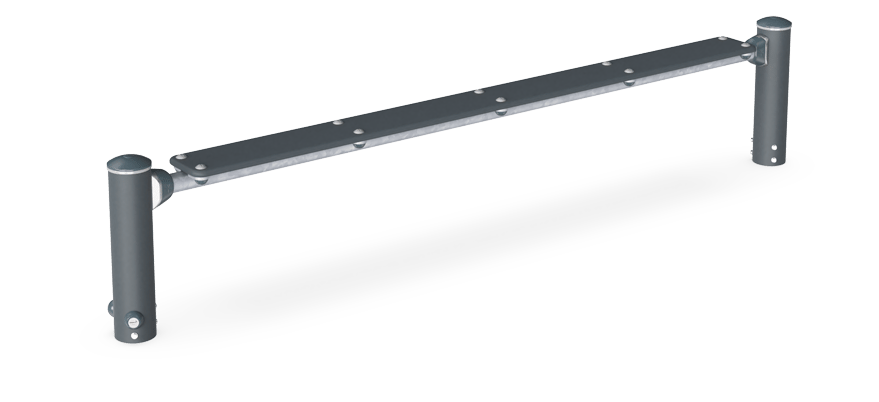
Balance Beam, Flat
Age Group
4+ Years
Capacity
2
Inclusive
Yes
Product category
PCM80721
Balance Beam, Flat
Specifications
Balance Beam, Flat
The Balance Beam is a great playground classic, that attracts children again and again. It can function as playground glue, connecting activities and friends. It can also function as a point for a break, providing seating for children sharing, or parents or carers in need of a point from which to observe the children play. When children balance across the Balance Beam, they train their equilibrium immensely. The sense of balance is a fundamental motor skill, that is basic for the development of all other skills. The sense of balance for instance makes it possible for children to sit still and concentrate. So the fun of physical play supports child development. The spaciousness allows for ample social interaction and cooperative play.
This product, Balance Beam, Flat (PCM80721), is provided by KOMPAN Middle East (MEA).
Length
227 cm
Width
15 cm
Height
45 cm
Fall Space Length
527 cm
Fall Space Width
315 cm
Age Group
4+ Years
Key user group
4 - 15 Years
Capacity
2
Inclusive
Yes
Product category
Classic Playgrounds
Product line
Classic Freestanding Play Equipment
Product Highlights
Quality that lasts
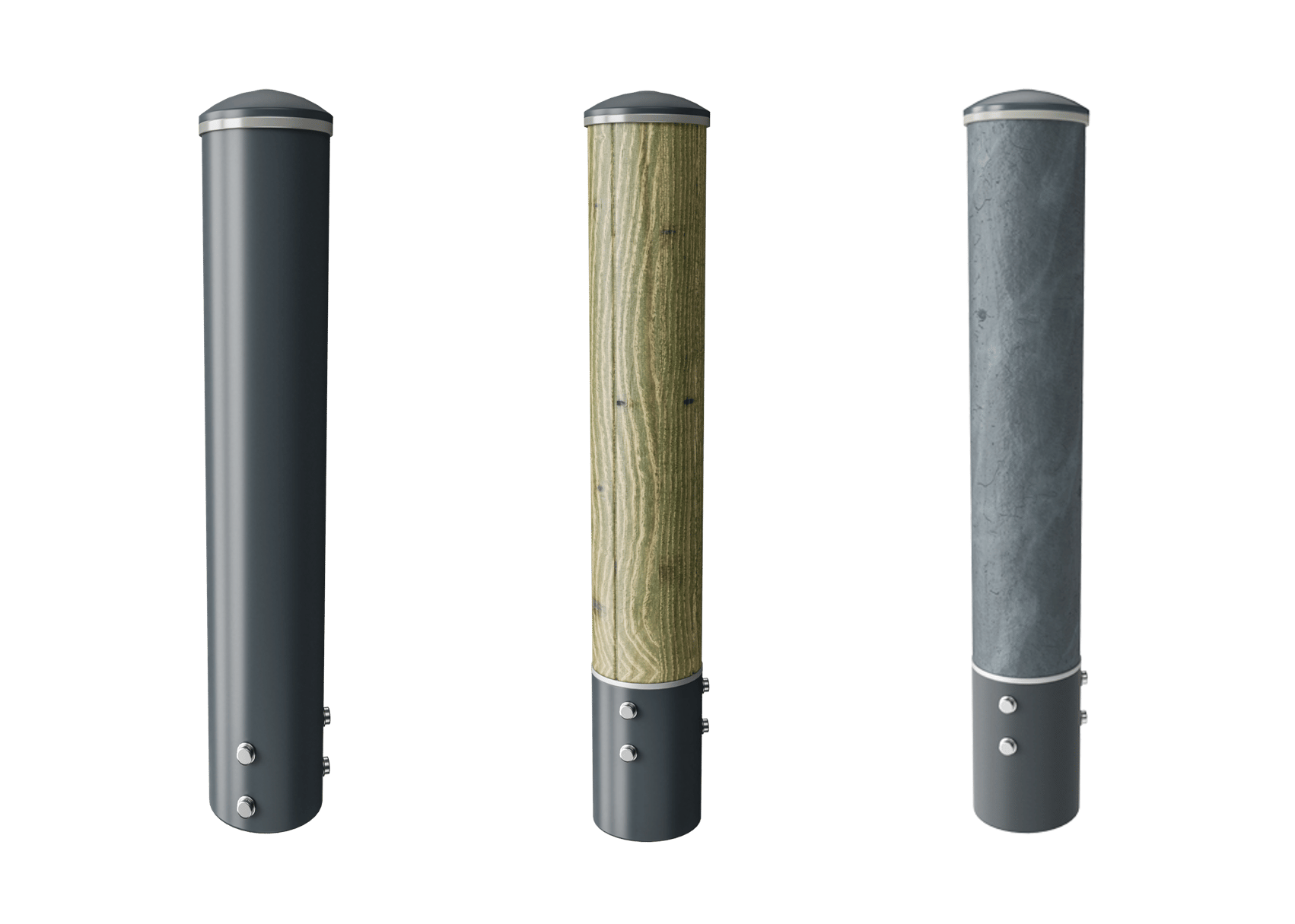
Main posts with hot dip galvanized steel footing are available in different materials: Pressure impregnated pine wood posts. Pre-galvanized inside and outside with powder coated top finish steel posts. Lead free aluminum with color anodized top finish. Greenline TexMade posts of 95% post-consumer recycled PE and textile waste.
The steel surfaces are hot dip galvanised inside and outside with lead free zinc. The galvanisation has excellent corrosion resistance in outside environments and requires low maintenance.
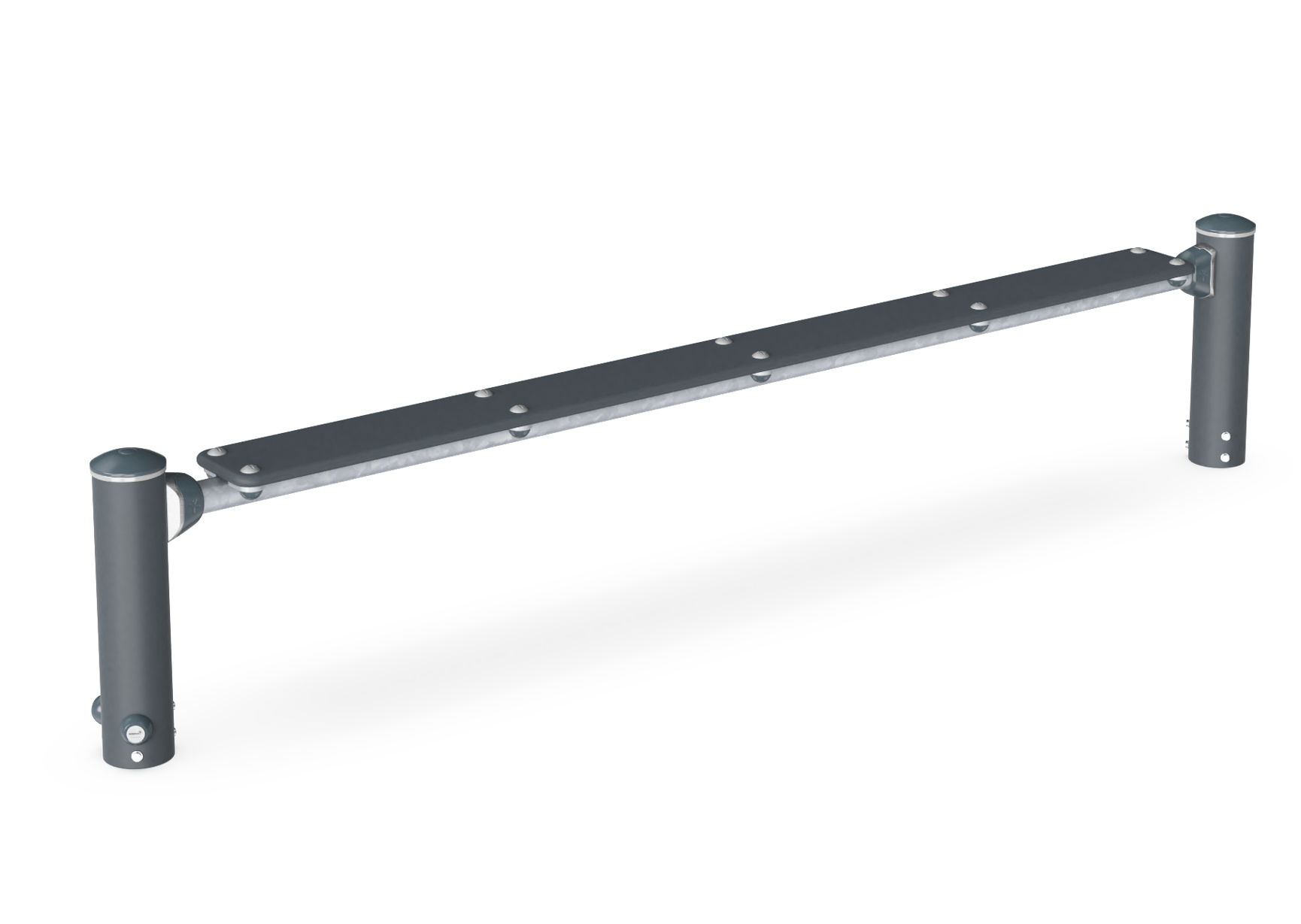
The steps are made of High Pressure Laminate HPL with a thickness 17,8mm and non skid surface texture according to EN 438-6. KOMPAN HPL has high wearing strength to ensure long lifetime in all climates.
Play Activities

Balance
1

Sensory
4

Socialize
1
Each play activity represents a type of play experience, such as balancing, social interaction, climbing, or sensory exploration. The number indicates how many opportunities the product offers for children to engage in that activity. Together, these activities help create a varied and developmentally rich play experience.
CO₂ emission
Sustainability Data
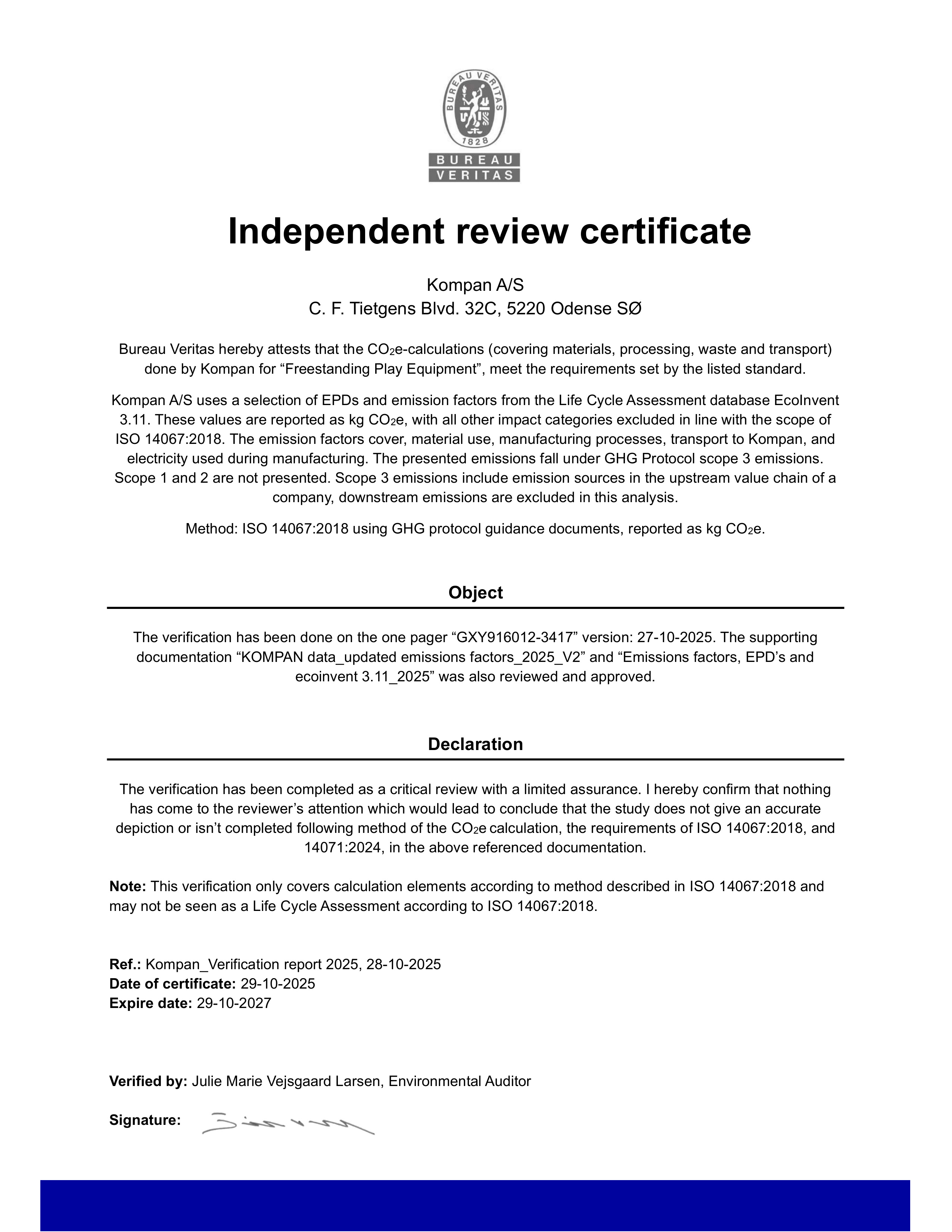
Our product and sustainability data validation help customers make informed sustainable buying choices based on methods validated by Bureau Veritas.
PCM80721-0901
132.77
Total CO₂ emission (kg CO₂e)
4.25
CO₂e/kg (kg CO₂e/kg)
45.89%
Recycled materials
The overall framework applied for these factors is the Environmental Product Declaration (EPD), which quantifies "environmental information on the life cycle of a product and enable comparisons between products fulfilling the same function" (ISO, 2006). This follows the structure and applies a Life-Cycle Assessment approach to the entire Product stage from raw material through manufacturing (A1-A3).